

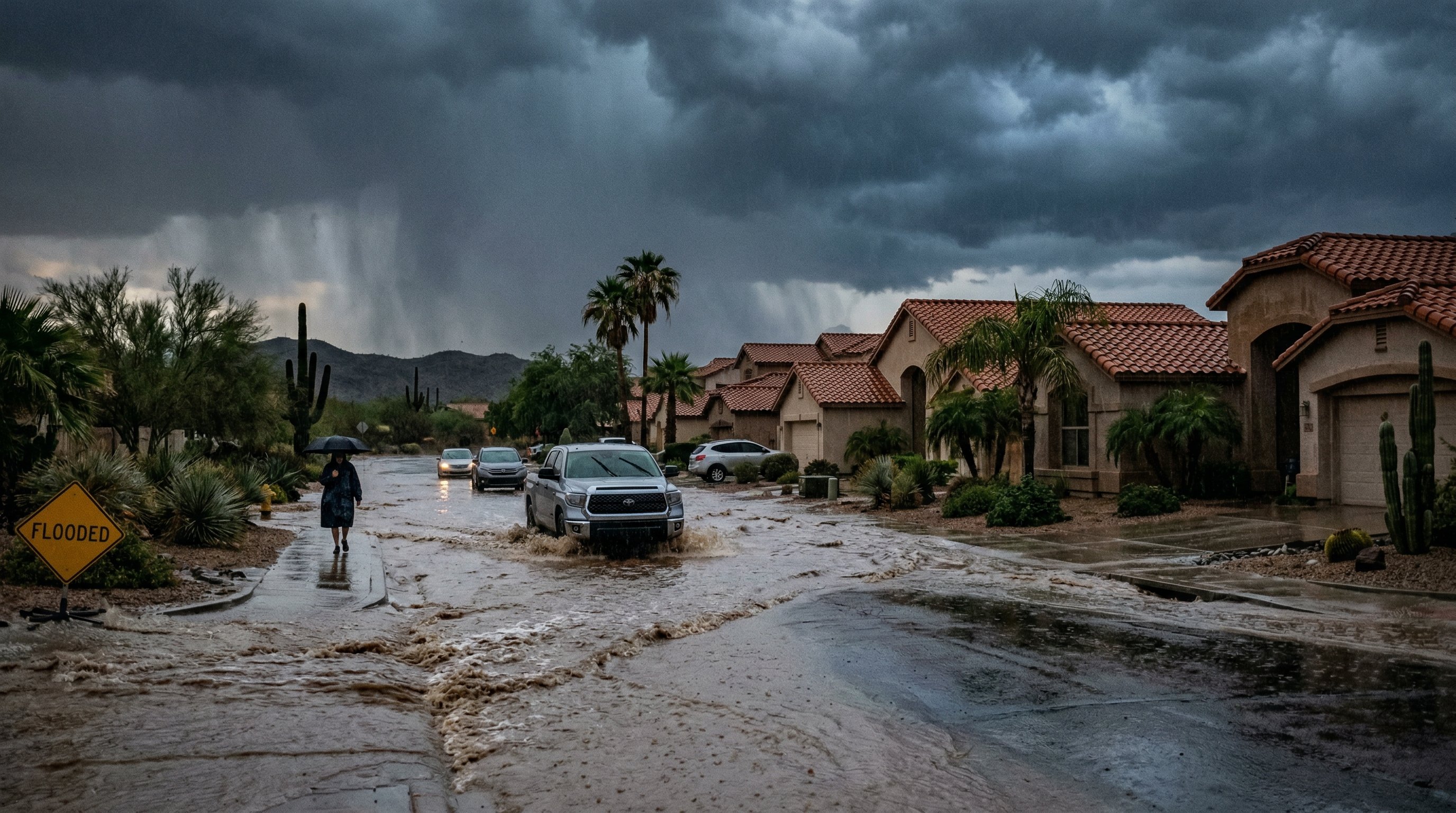
How Phoenix's Monsoon Season Causes Catastrophic Home Flooding
Every summer, Phoenix, AZ transforms from a sun-baked desert city into the target of one of the most powerful storm systems in North America. The North American Monsoon, which typically runs from mid-June through late September, delivers violent thunderstorms, flash floods, and relentless rainfall that can overwhelm homes, streets, and drainage infrastructure within minutes. For homeowners across the Phoenix metro area, monsoon season isn't just an inconvenience — it's a serious threat that can cause catastrophic, costly water damage.
Understanding why Phoenix's monsoon season is so destructive is the first step toward protecting your home. In this guide, we'll break down exactly how these storms form, why desert conditions make flooding worse, and what happens when monsoon floodwater enters your home. We'll also cover what to do if your home floods and when to call a professional water damage restoration team.
What Is the Phoenix Monsoon Season?
The word "monsoon" comes from the Arabic word mawsim, meaning season. In Arizona, the monsoon refers to a seasonal shift in wind patterns that draws moisture from the Gulf of California and Gulf of Mexico up into the desert Southwest. This dramatic change in atmospheric moisture fuels intense afternoon and evening thunderstorms that can drop months' worth of rain in a single storm event.
When Does Monsoon Season Begin and End?
Arizona's official monsoon season runs from June 15 through September 30, as designated by the National Weather Service. However, the most intense activity typically occurs in July and August. During these peak months, Phoenix can experience multiple severe storm events per week, each capable of dumping over an inch of rain in under an hour — a volume the Valley's infrastructure was never fully designed to handle.
How Monsoon Storms Form
Monsoon storms in Phoenix don't behave like typical rainstorms in other parts of the country. They form rapidly, intensify quickly, and often arrive with little warning. Here's how the process unfolds:
- Daytime heating: Phoenix's desert surface absorbs intense solar radiation throughout the day, superheating the air near the ground.
- Moisture influx: Monsoonal moisture from the south and southeast flows into the region, colliding with the hot desert air.
- Rapid convection: The clash creates towering cumulonimbus clouds that can reach 40,000 feet in altitude within hours.
- Microburst activity: As rain falls through dry air aloft, it can create violent downdrafts known as microbursts, with winds exceeding 60–80 mph.
- Flash flooding: The intense rainfall rate overwhelms drainage systems, sending water cascading across streets and into low-lying properties.
Why Desert Soil Makes Phoenix Flooding Worse
One of the most underappreciated factors in Phoenix's catastrophic monsoon flooding is the nature of the desert soil itself. Phoenix's Sonoran Desert soil is predominantly composed of caliche — a hardened layer of calcium carbonate — combined with sandy and silty soils that behave very differently from the loamy soils found in wetter climates.
The Caliche Problem
Caliche is essentially impermeable. When rainfall hits caliche-heavy soil, water cannot penetrate into the ground. Instead of being absorbed, virtually all rainfall becomes surface runoff almost immediately. This means even moderate rainfall can generate enormous volumes of moving water within minutes. In neighborhoods where caliche is near the surface, a single monsoon storm can produce runoff volumes equivalent to a much larger storm in other regions.
Hydrophobic Soil Crust
Even in areas without heavy caliche, Phoenix's desert soils often develop a hydrophobic crust on their surface during dry spells. This water-repellent layer, caused by residue from decomposing plants and microorganisms, further prevents rainfall absorption. During early monsoon storms — when soil is bone dry from weeks or months without rain — water has almost nowhere to go except across the surface and into your home.
How Monsoon Flooding Enters Phoenix Homes
There are several common pathways through which monsoon floodwater infiltrates Phoenix homes. Understanding these entry points can help you take targeted preventative action — and helps explain why flood damage restoration is often required after even a single major storm.
Overloaded Storm Drains and Streets
Phoenix's street and drainage network was designed with certain rainfall intensity thresholds in mind. When a storm exceeds those thresholds — which increasingly happens with more intense monsoon events — water backs up in streets and flows into driveways, garages, and homes. Homes in low-lying areas, near washes, or at the bottom of slopes are especially vulnerable.
Foundation and Basement Intrusion
Hydrostatic pressure — the weight and force of saturated soil pressing against your home's foundation — can drive water through cracks, joints, and gaps in concrete block or slab foundations. Even homes without traditional basements in Phoenix can experience slab seepage when storm runoff pools around the foundation perimeter.
Window Wells and Doors
Floodwater rising above door thresholds or flowing through window well drains is another frequent entry point. Window well drain systems in Phoenix are often undersized for monsoon volumes, leading to rapid water accumulation that pushes through window seals and into below-grade rooms.
Roof and Attic Penetration
Monsoon storms bring more than just rain — they bring 60+ mph winds, hail, and flying debris. Damaged or lifted roof shingles, compromised flashing around chimneys and skylights, and clogged gutters all create pathways for water to enter the attic and ceiling cavities. From there, it migrates down walls and into living spaces. Our roof leak repair services address these storm-related entry points before they become major structural problems.
The Damage Monsoon Water Causes Inside Your Home
Once floodwater enters your Phoenix home, the clock starts ticking. Water damage is progressive — the longer water sits, the more systems and materials it affects, and the more expensive the restoration becomes.
Flooring and Subfloor Damage
Hardwood floors can buckle and warp within hours of exposure to standing water. Tile grout becomes saturated, potentially destabilizing tile installations. Carpeting absorbs water like a sponge, and the padding beneath it holds moisture against the subfloor, which can begin to swell, delaminate, or rot within 24–48 hours.
Drywall and Insulation Saturation
Standard drywall (gypsum board) is highly porous and absorbs water rapidly. Once saturated, it loses structural integrity, develops mold within 24–72 hours, and typically must be removed and replaced. Fiberglass batt insulation in walls and floors also absorbs and retains water, drastically slowing drying times if not extracted.
Electrical System Hazards
Water and electricity are a life-threatening combination. Monsoon floodwater that reaches electrical outlets, junction boxes, panel boxes, or appliances creates serious shock and fire risks. Any home that has experienced significant flooding should have its electrical system inspected by a licensed electrician before power is restored to affected areas.
Mold Growth in Phoenix's Humid Post-Storm Environment
While Phoenix is famously dry most of the year, the weeks following monsoon storms create elevated indoor humidity that is ideal for mold growth. Mold can begin colonizing wet drywall, wood framing, and insulation within 24–48 hours of water intrusion. Phoenix's warm temperatures accelerate mold growth further. For more information on this risk, read our post on how fast mold grows after water damage in Phoenix.
Immediate Steps After Monsoon Flooding
If your Phoenix home floods during monsoon season, taking the right steps immediately can significantly reduce damage and costs. Here's what to do:
- Ensure safety first: Don't enter a flooded area if there's any risk of electrical hazards. Shut off power at the breaker panel if it's safe to do so.
- Stop the water source if possible: If flooding is from a backed-up drain or secondary source you can control, stop it.
- Document everything: Take photos and video of all damage before any cleanup for your insurance claim.
- Contact your insurance company: File a claim as soon as possible. Review our post on what to do after water damage in Phoenix for more guidance.
- Call a professional restoration company: Don't wait. Professional water extraction within the first few hours dramatically reduces secondary damage.
Q&A: Phoenix Monsoon Flooding
Does regular homeowner's insurance cover monsoon flooding in Phoenix?
Standard homeowner's insurance policies typically do not cover flooding from overland water flow (surface flooding). Flood damage in Phoenix is generally only covered by a separate flood insurance policy through the National Flood Insurance Program (NFIP) or a private flood insurer. However, if water enters through a compromised roof or broken window during a storm, that may be covered as windstorm or water damage under your standard policy. Always review your specific policy and consult with your insurance agent after a storm event.
How quickly does monsoon floodwater cause structural damage?
Structural damage from flooding can begin within hours. Wood framing begins to absorb moisture almost immediately, and drywall can start losing structural integrity within 24 hours. Mold colonization on porous materials can begin in as little as 24–48 hours in Phoenix's warm conditions. This is why professional extraction and drying within the first 24 hours is so critical.
Can I clean up monsoon flood damage myself?
Minor surface water on hard, non-porous flooring can sometimes be managed with mops and fans. However, any flooding that has saturated carpet, reached drywall, entered wall cavities, or involved any category 2 or 3 water (sewage backup, wash water) requires professional remediation. Attempting DIY cleanup on significant flood damage risks inadequate drying, hidden moisture pockets, and dangerous mold growth.
What areas of Phoenix are most at risk for monsoon flooding?
Low-lying neighborhoods near major washes (such as the Salt River, Skunk Creek, New River, and Agua Fria River corridors), areas with older or inadequate storm drainage infrastructure, and homes at the foot of slopes or in natural drainage paths face the highest flood risk. The City of Phoenix maintains flood zone maps available through its Planning and Development Department website.
How long does it take to dry out a home after monsoon flooding?
The drying timeline depends on the volume of water, materials affected, and how quickly professional drying equipment is deployed. Most residential flood drying projects in Phoenix take between 3 and 5 days with professional equipment. Our detailed post on dehumidification and drying services explains the process in full.
Protecting Your Home Before Monsoon Season Arrives
Prevention is always less expensive than restoration. Before each monsoon season, Phoenix homeowners should complete the following checklist:
- Clean gutters and downspouts to ensure proper drainage away from the foundation
- Inspect and repair roof flashing, shingles, and seals around penetrations
- Grade soil and landscaping to direct water away from the foundation
- Install or inspect window well drains and covers
- Consider a sump pump installation in vulnerable areas
- Review and update flood insurance coverage before the season begins
- Know the locations of your main water shutoff and electrical panel
For homeowners in high-risk areas, our exterior drainage solutions and waterproofing">waterproofing services can provide long-term protection against recurring monsoon flooding.
Why Professional Water Damage Restoration Matters After a Monsoon
After a monsoon flood event, it can be tempting to handle cleanup yourself — renting a shop vac, running box fans, and hoping for the best. But Phoenix's warm temperatures and the potential for mold growth make this a high-risk strategy. Professional restoration companies use industrial-grade extraction equipment, moisture meters, thermal imaging cameras, and commercial dehumidifiers and air movers to ensure complete, verified drying of all structural components. This isn't just about comfort — it's about protecting your home's structural integrity, your family's health, and the long-term value of your property.
Phoenix Water Damage Restoration is a trusted choice for commercial & residential water damage restoration in Phoenix, AZ, delivering fast response times, expert drying, and full-service restoration. Whether you're dealing with the aftermath of a major monsoon flood or a smaller water intrusion event, our team is available 24/7 to respond fast and get your home back to normal. Call Us 24/7: (623) 300-3108
Easy steps to create a color palette
Lorem ipsum dolor sit amet, consectetur adipiscing elit lobortis arcu enim urna adipiscing praesent velit viverra sit semper lorem eu cursus vel hendrerit elementum morbi curabitur etiam nibh justo, lorem aliquet donec sed sit mi dignissim at ante massa mattis.
- Neque sodales ut etiam sit amet nisl purus non tellus orci ac auctor
- Adipiscing elit ut aliquam purus sit amet viverra suspendisse potent
- Mauris commodo quis imperdiet massa tincidunt nunc pulvinar
- Excepteur sint occaecat cupidatat non proident sunt in culpa qui officia
What is a color palette?
Vitae congue eu consequat ac felis placerat vestibulum lectus mauris ultrices cursus sit amet dictum sit amet justo donec enim diam porttitor lacus luctus accumsan tortor posuere praesent tristique magna sit amet purus gravida quis blandit turpis.

Don’t overspend on growth marketing without good retention rates
At risus viverra adipiscing at in tellus integer feugiat nisl pretium fusce id velit ut tortor sagittis orci a scelerisque purus semper eget at lectus urna duis convallis porta nibh venenatis cras sed felis eget neque laoreet suspendisse interdum consectetur libero id faucibus nisl donec pretium vulputate sapien nec sagittis aliquam nunc lobortis mattis aliquam faucibus purus in.
- Neque sodales ut etiam sit amet nisl purus non tellus orci ac auctor
- Adipiscing elit ut aliquam purus sit amet viverra suspendisse potenti
- Mauris commodo quis imperdiet massa tincidunt nunc pulvinar
- Adipiscing elit ut aliquam purus sit amet viverra suspendisse potenti
What’s the ideal customer retention rate?
Nisi quis eleifend quam adipiscing vitae aliquet bibendum enim facilisis gravida neque euismod in pellentesque massa placerat volutpat lacus laoreet non curabitur gravida odio aenean sed adipiscing diam donec adipiscing tristique risus amet est placerat in egestas erat.
“Lorem ipsum dolor sit amet consectetur adipiscing elit, sed do eiusmod tempor incididunt ut labore et dolore magna aliqua enim ad minim veniam.”
Next steps to increase your customer retention
Eget lorem dolor sed viverra ipsum nunc aliquet bibendum felis donec et odio pellentesque diam volutpat commodo sed egestas aliquam sem fringilla ut morbi tincidunt augue interdum velit euismod eu tincidunt tortor aliquam nulla facilisi aenean sed adipiscing diam donec adipiscing ut lectus arcu bibendum at varius vel pharetra nibh venenatis cras sed felis eget.