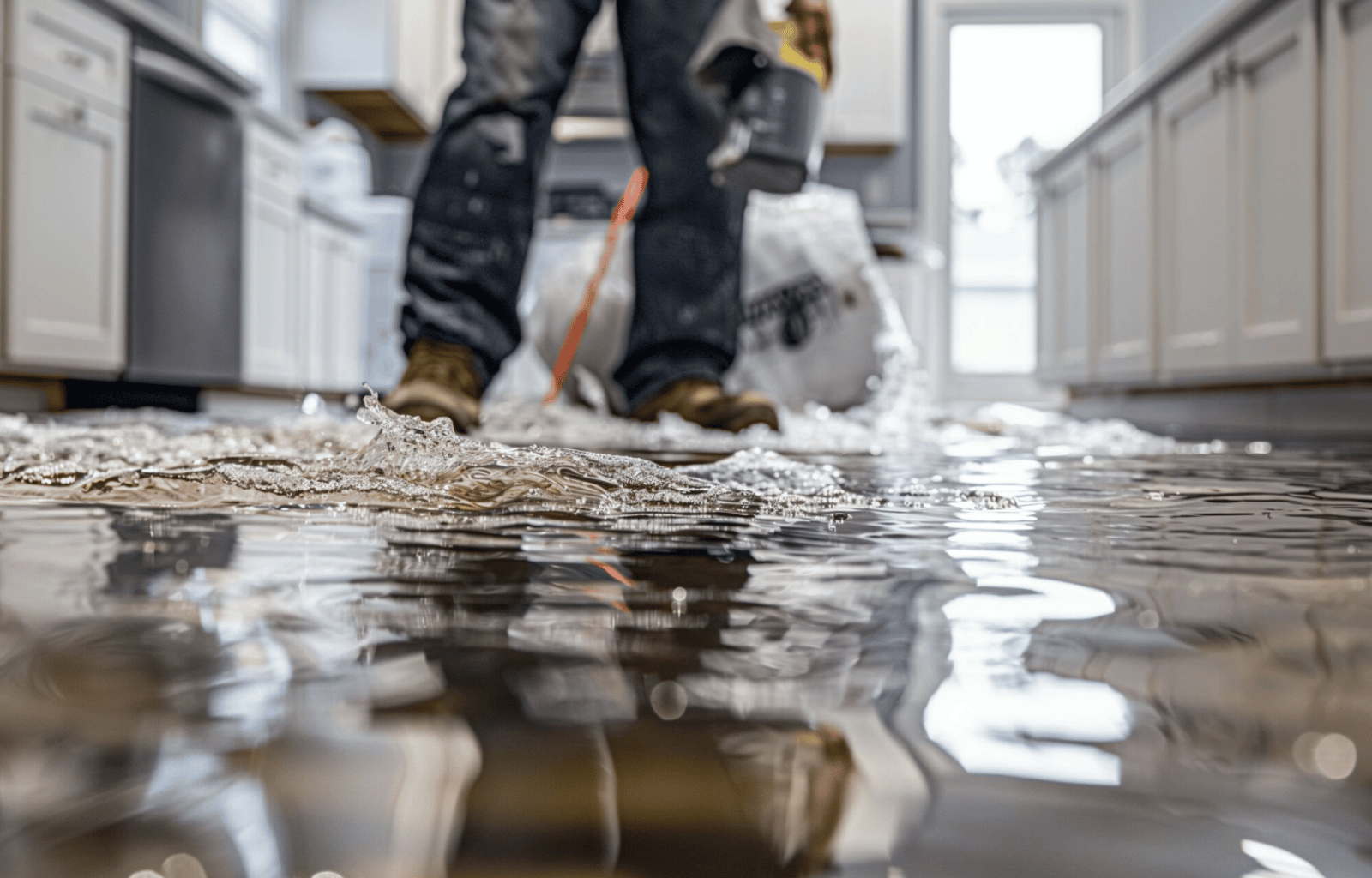


Phoenix homeowners often think of roof leaks as a roofing problem. But once water enters your home through a compromised roof, it becomes a water damage problem — and the consequences can reach far beyond the point where the leak first appears. Roof leak water damage in Phoenix can spread through attic insulation, saturate ceiling drywall and framing, wick into wall cavities, and damage electrical systems, all while remaining partially hidden until significant damage has already occurred.
Whether the leak was caused by a Phoenix monsoon storm, summer heat expansion and cracking, failed flashing, or a fallen tree branch, the steps you take in the first hours determine how much damage ultimately results. This guide tells you exactly what to do — and what not to do — after discovering a roof leak in your Phoenix, AZ home.
How Roof Leaks Cause Water Damage in Phoenix Homes
Understanding how roof leak water damage spreads helps explain why prompt action matters so much. Water entering through the roof doesn't fall straight down to the floor. It follows paths of least resistance that can take it far from the original entry point.
Attic Damage
The attic is the first interior space water contacts after a roof breach. Insulation absorbs and holds enormous amounts of water, dramatically slowing evaporation. Phoenix attic temperatures regularly exceed 150°F in summer — extreme heat that both accelerates structural damage and creates ideal conditions for rapid mold growth once insulation becomes wet. Roof decking (the plywood or OSB sheathing beneath the roofing material) absorbs moisture and can begin to soften, rot, and lose structural integrity with repeated or prolonged wetting.
Ceiling Damage
Once water accumulates above a ceiling, it saturates the drywall from above. Ceiling drywall can hold significant water weight before failing — creating a dangerous condition where a saturated ceiling can collapse under its own weight. The visible stain on your ceiling is typically a fraction of the saturated area, since water spreads laterally through insulation and drywall before becoming visible.
Wall Cavity Intrusion
Water that moves along ceiling framing can migrate into wall top plates and run down inside wall cavities. In Phoenix homes where walls contain fiberglass batt insulation, this moisture can travel downward over a significant distance before becoming evident at the baseboard level. By then, framing, insulation, and drywall throughout the wall height may be affected.
Electrical Hazards
Water in attic spaces and ceiling cavities contacts electrical junction boxes, wiring, light fixtures, and recessed lighting housings. This creates both immediate shock hazard and long-term risk of electrical shorts, corrosion, and fire. Any roof leak that may have contacted electrical components requires electrical inspection before those circuits are re-energized.
Common Causes of Roof Leaks in Phoenix
Monsoon Storm Damage
Phoenix's monsoon season (mid-June through September) brings wind-driven rain, hail, and debris impact that can damage roofing materials, dislodge tiles, and stress seals around vents and penetrations. Even a well-maintained roof can sustain damage from a severe monsoon event. The intensity of water delivery during a Phoenix monsoon — sometimes several inches in an hour — means even minor compromises can allow significant water intrusion.
Flat Roof Ponding
Many Phoenix commercial and residential properties feature flat or low-slope roofs. These roofs are particularly vulnerable to ponding water if drainage is compromised. Even a few inches of standing water on a flat roof will find any weakness in the membrane and exploit it. Regular inspection and drain maintenance are essential for flat-roof Phoenix properties.
Flashing Failures
Flashing — the metal strips that seal roof penetrations, valleys, chimneys, and skylights — is one of the most common points of failure. Phoenix's extreme temperature cycling (cold nights in winter, 110°F+ days in summer) causes metal to expand and contract repeatedly, eventually working fasteners loose and breaking sealant bonds. Flashing failures often produce slow, intermittent leaks that go undetected until significant damage has accumulated.
Tile Cracking and Displacement
Clay tile and concrete tile roofs are common in Phoenix and extremely durable in normal use, but they can crack from foot traffic, falling debris (branches, hail), or freeze-thaw cycles in cold winters. Broken or displaced tiles expose the underlayment, which has a finite lifespan and will eventually fail if not protected by intact tile above it.
Aging and Deteriorating Materials
Underlayment, sealants, and roofing membranes all have service lives. Phoenix's UV intensity and temperature extremes accelerate degradation of these materials. A roof that has served a Phoenix home for 20+ years without inspection or maintenance is at elevated risk of multiple simultaneous failures.
Immediate Steps to Take After Discovering a Roof Leak in Phoenix
Step 1: Contain the Water Inside Your Home
Place buckets, trash cans, or any large containers under active drips. Cover furniture, electronics, and valuables with plastic sheeting or move them out of the affected area entirely. If you can safely access ceiling areas showing active bulging, use a screwdriver to puncture a small hole at the lowest point of the bulge — this releases accumulated water in a controlled stream rather than allowing it to build until the ceiling fails catastrophically.
Step 2: Address Electrical Hazards
Turn off power at the breaker panel to any circuits serving the affected area — particularly ceiling lights, ceiling fans, and outlets on walls beneath the leak area. Do not re-energize these circuits until a licensed electrician has inspected them. If you have any doubt about the extent of water contact with electrical systems, shut off the main breaker and call both an electrician and your restoration professional.
Step 3: Document All Visible Damage
Before moving anything or attempting any cleanup, photograph and video all visible damage. Document: the leak point on the ceiling, all water staining, any standing water, all wet materials, damaged contents, and any visible roof damage from safe ground-level or interior vantage points. This documentation is the foundation of your insurance claim. Review what homeowners insurance covers for water damage in Phoenix to understand your coverage before filing.
Step 4: Apply Emergency Roof Tarping (If Safe)
If the storm has passed and the roof is accessible, emergency tarping can prevent additional water intrusion until permanent repairs are made. This is best left to professionals or those with roofing experience — walking on a wet tile roof without proper technique causes both additional roof damage and serious fall risk. Never attempt to access a roof during active rain or lightning.
Step 5: Call a Water Damage Restoration Professional Immediately
Even if the active leak has been stopped, the water damage restoration process needs to begin as quickly as possible. Water that entered through a roof leak has been soaking into attic insulation, ceiling materials, and potentially walls from the moment it entered. The longer drying is delayed, the more extensive secondary damage becomes. Contact a Phoenix water damage restoration company for emergency response — our roof leak repair and water damage services include both emergency mitigation and full structural drying.
The Water Damage Assessment Process for Roof Leaks
When Phoenix Water Damage Restoration responds to a roof leak water damage call in Phoenix, AZ, our assessment goes far beyond the visible stain on your ceiling. A comprehensive evaluation includes:
Attic Inspection
Technicians inspect the attic to assess insulation saturation, roof deck condition, and the extent of moisture distribution. In Phoenix, wet attic insulation can be deceptively difficult to assess visually — thermal imaging is often necessary to reveal the true distribution of moisture.
Thermal Imaging Survey
Our thermal imaging inspection reveals moisture trapped behind ceiling drywall and inside wall cavities that is completely invisible to the naked eye. Thermal cameras detect temperature differentials caused by evaporative cooling in wet materials — showing exactly where moisture has migrated even if no staining is yet visible.
Moisture Mapping
Moisture meters measure the actual moisture content of affected materials. This establishes a baseline for the drying process and identifies all materials requiring treatment or replacement. Moisture mapping documents the full scope of damage for insurance purposes and guides equipment placement during drying.
Structural Assessment
Particularly in cases of prolonged or repeated leaking, structural assessment evaluates the condition of roof decking, ceiling joists, and wall framing for signs of deterioration, soft spots, or compromised integrity that must be addressed before reconstruction.
The Restoration Process for Roof Leak Water Damage
Wet Insulation Removal
Wet attic insulation must be removed. Unlike many building materials, soaked insulation cannot be effectively dried in place — it retains moisture even under sustained airflow and creates a persistent mold risk. Removal is required before the attic and ceiling cavity can be dried to standard. New insulation is installed after all structural materials achieve target moisture levels.
Ceiling Drywall Assessment and Removal
Significantly saturated ceiling drywall must be removed. Drywall that appears stained but has not fully saturated may sometimes be dried in place with appropriate equipment, but severely affected sections must come down. This also provides access for drying the ceiling cavity and inspecting joists.
Structural Drying
Industrial air movers and dehumidifiers are deployed to dry the affected attic space, ceiling cavity, and any affected wall sections. In attic environments, specialized equipment configurations are required to manage the large volume of air and address the challenges of drying irregular spaces around rafters and trusses.
Antimicrobial Treatment
All affected structural surfaces receive antimicrobial treatment before reconstruction. Given Phoenix's temperature environment, mold risk following a roof leak is significant and precautionary treatment is standard practice.
Roof Repair Coordination
Water damage restoration and roof repair are related but distinct services. Phoenix Water Damage Restoration handles the interior water damage restoration, drying, and structural work. We coordinate with licensed Phoenix roofing contractors for the actual roof repair to ensure continuity between interior restoration and exterior protection.
Reconstruction
Once the structure is verified dry and treated, reconstruction returns the home to pre-loss condition: new insulation, drywall, ceiling texture, and painting. Our full-service approach means you work with one company from emergency response through final reconstruction rather than coordinating multiple contractors.
Roof Leak Prevention Tips for Phoenix Homeowners
While roof leaks can never be completely eliminated, regular maintenance significantly reduces both the likelihood of leaks and the severity of damage when leaks do occur:
Frequently Asked Questions About Roof Leak Water Damage in Phoenix
Does homeowners insurance cover roof leak water damage in Phoenix?
Most standard homeowners insurance policies in Arizona cover sudden and accidental water damage from roof leaks caused by covered perils — such as storm damage, hail, or wind. They typically do not cover damage from lack of maintenance, gradual deterioration, or pre-existing roof defects. The distinction between "sudden storm damage" and "progressive deterioration" is often the central issue in roof leak claims. Detailed documentation and prompt reporting are essential to a successful claim.
How can I tell if a ceiling water stain is from an old or active leak?
Active leaks typically show darker, wetter staining at the center with drying toward the edges, may feel damp or soft to the touch, and may produce a musty odor from mold activity. Old, dried stains are uniform in color, feel dry, and have no odor. However, a stain that appears old may indicate a slow or intermittent leak that continues to add moisture each time it rains. Professional moisture meter testing definitively determines whether moisture is currently present in the material.
How long after a roof leak does mold develop in Phoenix?
In Phoenix's warm climate, mold can begin colonizing wet insulation and ceiling materials within 24–48 hours. The combination of ambient heat, high moisture content in organic materials, and abundant mold spores in the environment means that delayed response to a roof leak significantly increases mold remediation scope. This is why prompt professional response is critical even after the active leak has been stopped.
Should I remove wet ceiling drywall myself after a roof leak?
Removing wet ceiling drywall yourself is not recommended for several reasons. Without moisture testing, you may remove material that could be dried in place or, conversely, leave material that needs to come down. Ceiling demolition without proper containment can spread dust and potential mold spores throughout the home. And without the drying equipment to follow demolition, opening walls and ceilings accelerates evaporation into the living space without removing it. Professional restoration manages demolition, containment, and drying as a coordinated process.
Can a slow drip from a roof leak cause serious damage?
Absolutely. Slow, intermittent leaks are often more damaging over time than acute flooding events because they go undetected while continuously wetting insulation, framing, and drywall. By the time visible staining appears on a ceiling, the leak may have been active for weeks or months. The affected area is often significantly larger than the visible stain suggests, and mold growth is frequently already underway in the attic or ceiling cavity. Annual roof inspections and attic checks after major monsoon events are the best defenses against undetected slow leaks.
Act Before Roof Leak Damage Spreads
A roof leak in Phoenix, AZ is not a problem that improves with time. Water in your attic and ceiling cavity is migrating, saturating, and creating conditions for mold growth every hour it goes unaddressed. The good news is that rapid professional response can limit damage dramatically, preserve structural materials, and return your home to pre-loss condition efficiently.
Phoenix Water Damage Restoration is a trusted choice for commercial & residential water damage restoration in Phoenix, AZ, delivering fast response times, expert drying, and full-service restoration.
Call Us 24/7: (623) 300-3108
Easy steps to create a color palette
Lorem ipsum dolor sit amet, consectetur adipiscing elit lobortis arcu enim urna adipiscing praesent velit viverra sit semper lorem eu cursus vel hendrerit elementum morbi curabitur etiam nibh justo, lorem aliquet donec sed sit mi dignissim at ante massa mattis.
- Neque sodales ut etiam sit amet nisl purus non tellus orci ac auctor
- Adipiscing elit ut aliquam purus sit amet viverra suspendisse potent
- Mauris commodo quis imperdiet massa tincidunt nunc pulvinar
- Excepteur sint occaecat cupidatat non proident sunt in culpa qui officia
What is a color palette?
Vitae congue eu consequat ac felis placerat vestibulum lectus mauris ultrices cursus sit amet dictum sit amet justo donec enim diam porttitor lacus luctus accumsan tortor posuere praesent tristique magna sit amet purus gravida quis blandit turpis.

Don’t overspend on growth marketing without good retention rates
At risus viverra adipiscing at in tellus integer feugiat nisl pretium fusce id velit ut tortor sagittis orci a scelerisque purus semper eget at lectus urna duis convallis porta nibh venenatis cras sed felis eget neque laoreet suspendisse interdum consectetur libero id faucibus nisl donec pretium vulputate sapien nec sagittis aliquam nunc lobortis mattis aliquam faucibus purus in.
- Neque sodales ut etiam sit amet nisl purus non tellus orci ac auctor
- Adipiscing elit ut aliquam purus sit amet viverra suspendisse potenti
- Mauris commodo quis imperdiet massa tincidunt nunc pulvinar
- Adipiscing elit ut aliquam purus sit amet viverra suspendisse potenti
What’s the ideal customer retention rate?
Nisi quis eleifend quam adipiscing vitae aliquet bibendum enim facilisis gravida neque euismod in pellentesque massa placerat volutpat lacus laoreet non curabitur gravida odio aenean sed adipiscing diam donec adipiscing tristique risus amet est placerat in egestas erat.
“Lorem ipsum dolor sit amet consectetur adipiscing elit, sed do eiusmod tempor incididunt ut labore et dolore magna aliqua enim ad minim veniam.”
Next steps to increase your customer retention
Eget lorem dolor sed viverra ipsum nunc aliquet bibendum felis donec et odio pellentesque diam volutpat commodo sed egestas aliquam sem fringilla ut morbi tincidunt augue interdum velit euismod eu tincidunt tortor aliquam nulla facilisi aenean sed adipiscing diam donec adipiscing ut lectus arcu bibendum at varius vel pharetra nibh venenatis cras sed felis eget.