
Appliance Leaks and Water Damage in Phoenix: Dishwashers, Washing Machines, and More
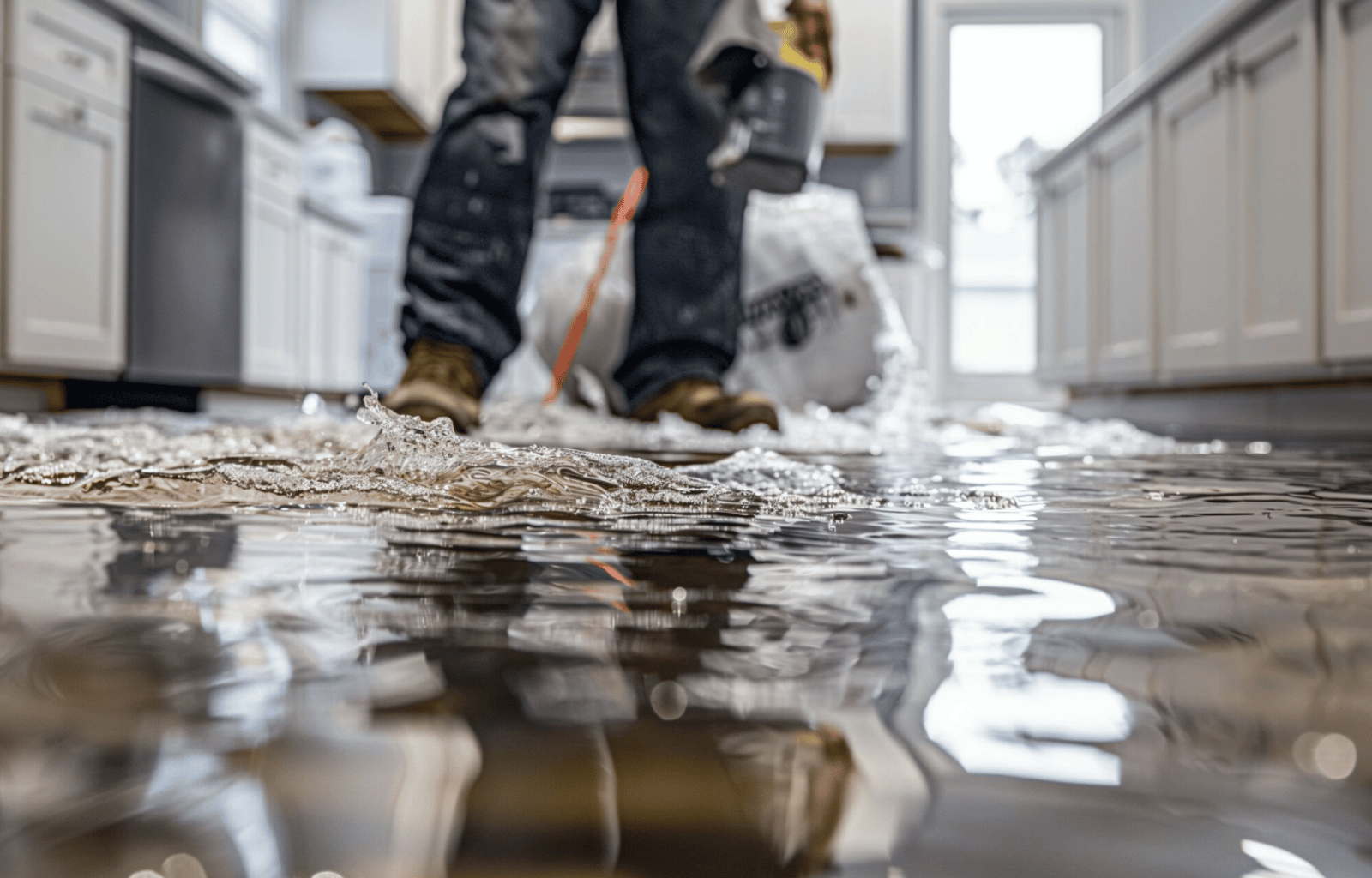
When Phoenix homeowners think about water damage, they often picture flooding from monsoon storms or burst pipes. But one of the most common — and most financially damaging — sources of water damage in Phoenix homes is far more mundane: a leaking appliance. Dishwashers, washing machines, refrigerators, water heaters, and ice makers collectively cause thousands of water damage insurance claims every year in Arizona. What makes appliance leaks particularly treacherous is how slowly and silently they can develop, saturating flooring, subfloors, and wall cavities for days or even weeks before anyone notices.
This guide covers the most common appliances that cause water damage in Phoenix homes, how to identify signs of a leak, what to do when you discover one, and why professional appliance leak cleanup is essential for a complete recovery.
Why Appliance Leaks Are a Major Water Damage Risk in Phoenix
Phoenix's desert climate creates a particular risk profile for appliance-related water damage. Homes in the Phoenix metro area rely heavily on air conditioning for the vast majority of the year, which means appliances like washing machines and dishwashers run frequently in a climate that tends to dry out rubber seals and hoses faster than more humid regions. The combination of heavy usage and accelerated material degradation creates a heightened risk of appliance failure.
Additionally, Phoenix's extreme summer heat — regularly exceeding 110°F — puts stress on water supply lines, hoses, and connection fittings throughout the home. Plastic components become brittle, rubber seals crack, and connections loosen over time. Many homeowners don't inspect appliance connections until a leak has already developed.
Most Common Appliances That Cause Water Damage in Phoenix Homes
Washing Machines
The washing machine is consistently ranked as one of the top sources of appliance-related water damage in American homes, and Phoenix is no exception. A standard washing machine holds 15 to 30 gallons of water per cycle and connects to home plumbing through hot and cold supply hoses. When those hoses fail — either through a slow drip or a sudden catastrophic burst — the result can be devastating.
Common Washing Machine Failure Points
- Supply hoses: Rubber washing machine hoses deteriorate over time and are prone to bulging, cracking, and bursting. A burst washing machine supply hose can release 500 to 750 gallons of water per hour — one of the most severe appliance failures a home can experience. Industry experts recommend replacing rubber supply hoses every 5 years and using reinforced braided steel hoses as a preventive upgrade.
- Door seals (front-loading machines): The rubber gasket around the door of front-loading washing machines traps moisture and debris. When seals crack or deteriorate, water can leak from the front of the machine during cycles, soaking the floor and migrating under flooring and into walls.
- Drain hose connections: Loose or improperly seated drain hoses can allow water to escape during the drain cycle, often flowing under the machine and along the floor toward walls.
- Pump and internal components: Internal pump seals and tub seals can deteriorate, causing slow internal leaks that drip through the machine's base and are often only noticed when flooring damage becomes visible.
Dishwashers
Dishwashers are another frequent culprit in Phoenix home water damage events. Located in the kitchen — a room with hardwood, tile, or engineered wood flooring and adjacent cabinetry — dishwasher leaks can cause significant damage to multiple surfaces before detection.
Common Dishwasher Failure Points
- Door gasket: The rubber gasket around the dishwasher door seals the unit during operation. When it cracks or loses elasticity — accelerated by Phoenix's heat — it allows water to escape from the door bottom during wash cycles.
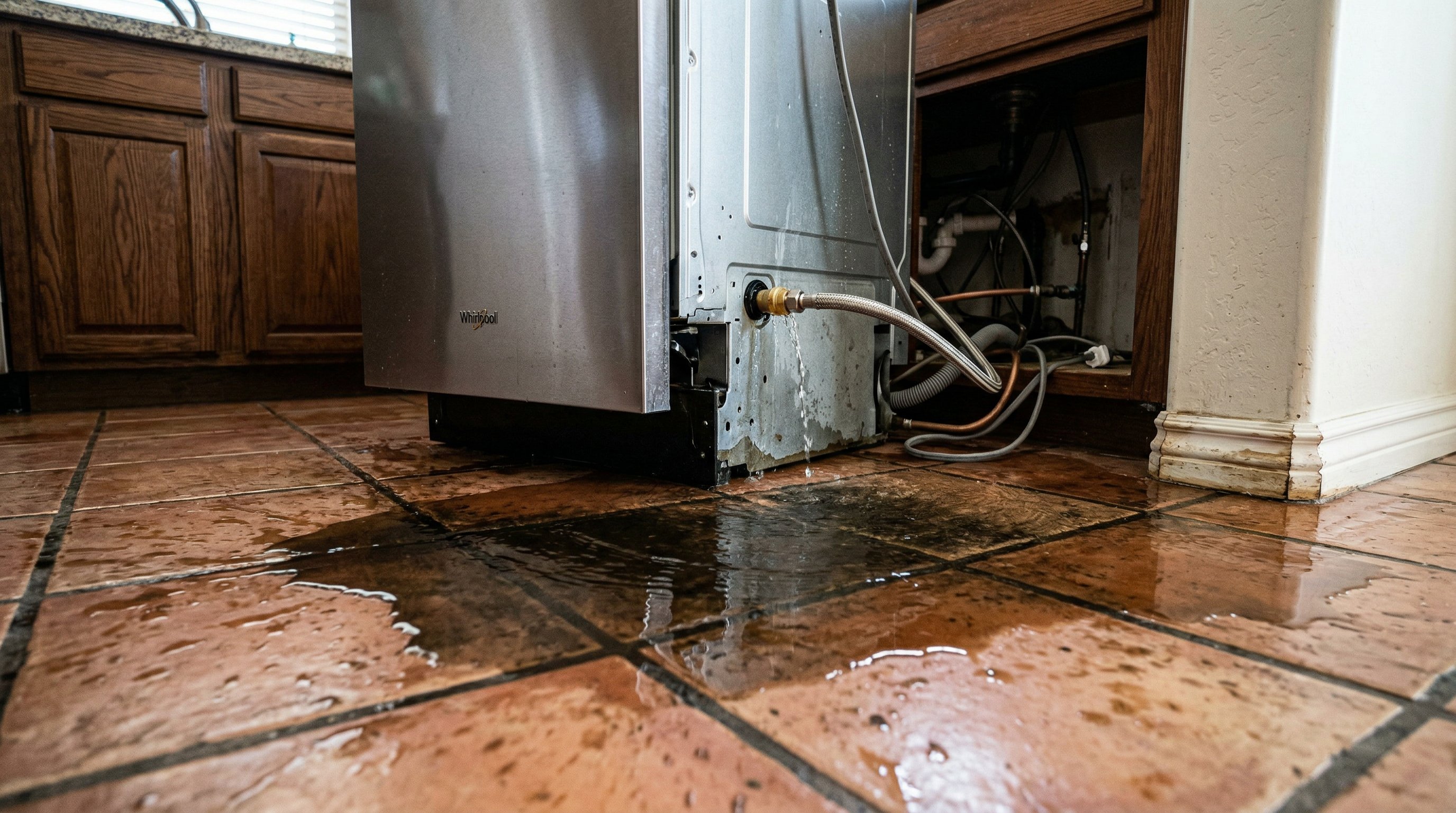
- Water supply line: The supply line connecting the dishwasher to the home's hot water supply is typically a braided stainless or plastic line routed under the sink. These connections can loosen over time, particularly in older homes, causing slow drips that saturate the cabinet floor and adjacent subflooring.
- Drain hose: The dishwasher drain hose routes wastewater to the sink drain. A cracked hose or loose connection can leak inside the cabinet, which is rarely inspected and can remain wet for extended periods.
- Internal component failures: Pump seals, float switches, and spray arm connections can all develop leaks that allow water to escape during operation.
Refrigerators with Ice Makers and Water Dispensers
Modern refrigerators with built-in ice makers and water dispensers require a water supply line connected to the home's plumbing. This thin plastic or copper supply line — running from the wall valve to the back of the refrigerator — is a common source of slow leaks that cause extensive damage before detection.
Common Refrigerator Failure Points
- Ice maker supply line: The thin plastic tubing used for many ice maker connections is susceptible to kinking, cracking, and connection failure. A pinhole leak can drip behind the refrigerator for months, slowly saturating the flooring and subfloor before becoming visible.
- Drain pan overflow: Refrigerators have a drain pan beneath them that collects condensation from the defrost cycle. A clogged defrost drain line can overflow the pan, pushing water onto the floor.
- Ice maker failures: A malfunctioning ice maker valve can allow water to run continuously, potentially overflowing the ice maker bin and leaking water inside the refrigerator and onto the floor.
Water Heaters
Phoenix homes almost universally have storage tank water heaters, which hold 40 to 80 gallons of heated water. As these units age, they are prone to corrosion, pressure buildup, and failure of connections and temperature-pressure relief valves.
Common Water Heater Failure Points
- Tank corrosion: The inside of a steel water heater tank is protected by a sacrificial anode rod that corrodes instead of the tank. When the anode rod is depleted, the tank itself begins to corrode, eventually developing pinhole leaks that can grow into catastrophic failures.
- Pressure relief valve: The temperature-pressure relief (TPR) valve releases water when pressure builds to dangerous levels. If this valve begins to drip, it indicates excessive pressure — and also causes ongoing water leakage.
- Inlet/outlet connections: The connections where supply and hot water lines meet the tank can corrode and develop slow drips that cause damage to the surrounding area.
Our hot water tank leak services address both the source of the problem and the resulting water damage to your Phoenix home.
HVAC Systems and Air Handlers
In Phoenix's extreme heat, air conditioning is not optional — it's a year-round necessity for much of the year. Air handling units, particularly those installed in attics (common in Phoenix's newer homes), have condensate drain pans and drain lines that can become clogged, overflow, and cause significant water damage to ceilings and walls below.
A clogged air handler condensate line is one of the most common causes of ceiling water damage in Phoenix homes. When the drain line becomes clogged with algae, dirt, or debris, the drain pan overflows, and water begins dripping through the ceiling below. By the time homeowners notice water stains on the ceiling, the surrounding attic structure, insulation, and drywall may already be thoroughly saturated.
Refrigerant Lines and Plumbing Condensation
In Phoenix's hot summers, cold water pipes running through warm, unconditioned spaces can develop significant condensation — enough in some cases to drip and cause surface water damage over time, particularly in poorly insulated areas like garages and utility rooms.
Signs of Appliance Leak Water Damage in Your Phoenix Home
Because many appliance leaks develop slowly, knowing what to look for can help Phoenix homeowners catch problems before they escalate into major damage. Watch for:
- Discoloration or staining on flooring near appliances, particularly along baseboards or at seams in vinyl or tile flooring
- Buckling, warping, or bubbling in hardwood, laminate, or engineered wood flooring adjacent to appliances
- Soft spots in flooring when walking near appliances — indicating subfloor saturation
- Musty or moldy odors near appliance areas, particularly under sinks or behind refrigerators
- Cabinet floor damage under dishwashers or under sinks, including swelling, discoloration, or soft particleboard
- Water stains on ceilings below upper-floor laundry rooms or directly below HVAC equipment
- Increased water bills without obvious explanation — a sign of a slow, continuous leak somewhere in the home
- Visible rust or corrosion around water heater connections, supply valves, or appliance connections
If you notice any of these signs, a professional leak detection inspection can identify the source before further damage occurs.
What to Do Immediately After Discovering an Appliance Leak
Acting quickly after discovering an appliance leak dramatically reduces the total cost and scope of damage. Follow these steps:
- Stop the water source immediately. For washing machines and dishwashers, turn off the appliance and close the supply valve behind or beneath it. For refrigerators, close the valve on the supply line at the wall. For water heaters, turn off the water supply valve at the top of the unit. If you cannot isolate the appliance's supply, shut off the main water supply to the home.
- Move the appliance if possible to access the leak source and prevent ongoing contact between the appliance and the flooring.
- Remove standing water with towels, mops, or a wet vacuum. Do not use a standard household vacuum — it can be damaged by water and create an electrical hazard.
- Move wet items — rugs, furniture, boxes stored near the appliance — away from the wet area to prevent additional damage and allow better airflow.
- Document the damage with photographs and video before any cleanup begins. This documentation is essential for your homeowner's insurance claim.
- Call Phoenix Water Damage Restoration at (623) 300-3108 for professional assessment and mitigation, particularly if water has been present for more than a few hours or has migrated under flooring or into walls.
Why Professional Appliance Leak Cleanup Is Essential
Many Phoenix homeowners assume that an appliance leak — especially one involving a relatively small amount of visible water — can be handled with towels and a fan. This is one of the most common and costly mistakes in home water damage management.
Hidden Moisture Is the Real Danger
Water from an appliance leak doesn't stay on the surface. It immediately begins migrating under flooring, into subfloor materials, through cabinet base panels, and along wall framing. This hidden moisture — invisible to the naked eye but detectable with professional moisture meters and thermal imaging — is what causes the most significant long-term damage. Hardwood floors that "look dry" after surface cleanup may have subfloor saturation that will cause cupping and buckling days later. Drywall that appears undamaged may have interior moisture that leads to mold growth within 24 to 48 hours.
Mold Risk After Appliance Leaks
Kitchens and laundry rooms — where most appliance leaks occur — are typically warmer rooms with limited airflow in the spaces where leaks develop (under sinks, behind appliances). These conditions are ideal for rapid mold growth. In Phoenix, where homes stay warm year-round, mold can begin colonizing wet materials within 24 hours of water exposure. Professional mitigation — including moisture mapping, drying equipment deployment, and antimicrobial treatment — is the only reliable way to prevent mold development after an appliance leak. Read more about how fast mold grows after water damage in Phoenix on our blog.
Subfloor and Structural Damage
The subfloor materials in most Phoenix homes — OSB (oriented strand board) or plywood — are particularly vulnerable to water damage. Once saturated, these materials swell, lose structural integrity, and can begin to delaminate. If the subfloor is not thoroughly dried quickly, it may require full replacement — a significantly more expensive repair than professional drying would have been.
Preventing Appliance Leaks in Your Phoenix Home
While Phoenix Water Damage Restoration is always ready to respond when leaks occur, prevention is always preferable. These steps can reduce your risk of appliance-related water damage:
- Replace rubber washing machine hoses with reinforced braided stainless steel hoses and inspect all hose connections annually.
- Install an automatic water shutoff device behind your washing machine — these devices sense water on the floor and automatically close the supply valve.
- Inspect the dishwasher door gasket monthly for cracks or stiffness and replace it at the first sign of deterioration.
- Replace plastic refrigerator ice maker supply lines with braided stainless steel alternatives.
- Flush your water heater annually to reduce sediment buildup, and have the anode rod inspected every 3 to 5 years.
- Clear your HVAC condensate drain line at the beginning of each cooling season — a mixture of bleach and water poured through the line prevents algae buildup.
- Install water leak detectors under sinks, behind appliances, and near the water heater — inexpensive sensors that sound an alarm when they detect moisture.
Frequently Asked Questions About Appliance Leak Water Damage in Phoenix
Does homeowner's insurance cover appliance leak water damage?
Generally, yes — most standard homeowner's insurance policies in Arizona cover water damage from sudden and accidental appliance failures. A burst washing machine hose or sudden dishwasher leak is typically covered. However, gradual leaks that developed slowly over time and were not promptly reported may be denied as a "maintenance issue." Prompt reporting and professional documentation are essential. For more detail, read our blog post on insurance coverage for water damage in Phoenix.
How quickly does mold develop after a washing machine or dishwasher leak?
Mold can begin colonizing wet materials within 24 to 48 hours in warm conditions. Phoenix homes stay warm year-round, which accelerates this risk. Professional mitigation should begin as quickly as possible after any appliance leak to prevent mold development.
Do I need to replace my flooring after an appliance leak?
Not necessarily. If professional drying begins quickly — within the first few hours — hardwood, engineered wood, and even some types of laminate flooring can often be dried in place and salvaged. Carpet and carpet padding are more difficult to fully dry and more prone to mold, and are often replaced. The key is rapid response and professional moisture testing to determine whether materials can be salvaged.
What should I do if I discover my washing machine has been leaking slowly for weeks?
A slow, ongoing leak is a more serious situation than a sudden one, because moisture has had time to deeply penetrate flooring, subfloor, and potentially wall cavities. Call Phoenix Water Damage Restoration immediately for a professional assessment. Our technicians will use moisture meters and thermal imaging to map the full extent of moisture migration and determine whether mold has already developed.
How do I know if my subfloor is damaged from an appliance leak?
Signs of subfloor damage include soft spots or springiness when walking on the floor near the appliance, visible floor deflection, squeaking that wasn't there before, or flooring that is separating, bubbling, or lifting. A professional assessment using moisture meters confirms subfloor saturation even when surface damage isn't visible. Our water damage restoration team can assess and address subfloor damage as part of the restoration process.
Fast Response to Appliance Leaks in Phoenix, AZ
When an appliance leak strikes your Phoenix home, time is the most critical factor. The faster you act — and the faster professional mitigation begins — the less total damage you'll face and the lower your restoration costs will be. Phoenix Water Damage Restoration responds quickly to appliance leak emergencies throughout Phoenix and the surrounding communities, providing thorough assessment, professional drying, and full restoration services.
Phoenix Water Damage Restoration is a trusted choice for commercial & residential water damage restoration in Phoenix, AZ, delivering fast response times, expert drying, and full-service restoration.
Call Us 24/7: (623) 300-3108
Easy steps to create a color palette
Lorem ipsum dolor sit amet, consectetur adipiscing elit lobortis arcu enim urna adipiscing praesent velit viverra sit semper lorem eu cursus vel hendrerit elementum morbi curabitur etiam nibh justo, lorem aliquet donec sed sit mi dignissim at ante massa mattis.
- Neque sodales ut etiam sit amet nisl purus non tellus orci ac auctor
- Adipiscing elit ut aliquam purus sit amet viverra suspendisse potent
- Mauris commodo quis imperdiet massa tincidunt nunc pulvinar
- Excepteur sint occaecat cupidatat non proident sunt in culpa qui officia
What is a color palette?
Vitae congue eu consequat ac felis placerat vestibulum lectus mauris ultrices cursus sit amet dictum sit amet justo donec enim diam porttitor lacus luctus accumsan tortor posuere praesent tristique magna sit amet purus gravida quis blandit turpis.

Don’t overspend on growth marketing without good retention rates
At risus viverra adipiscing at in tellus integer feugiat nisl pretium fusce id velit ut tortor sagittis orci a scelerisque purus semper eget at lectus urna duis convallis porta nibh venenatis cras sed felis eget neque laoreet suspendisse interdum consectetur libero id faucibus nisl donec pretium vulputate sapien nec sagittis aliquam nunc lobortis mattis aliquam faucibus purus in.
- Neque sodales ut etiam sit amet nisl purus non tellus orci ac auctor
- Adipiscing elit ut aliquam purus sit amet viverra suspendisse potenti
- Mauris commodo quis imperdiet massa tincidunt nunc pulvinar
- Adipiscing elit ut aliquam purus sit amet viverra suspendisse potenti
What’s the ideal customer retention rate?
Nisi quis eleifend quam adipiscing vitae aliquet bibendum enim facilisis gravida neque euismod in pellentesque massa placerat volutpat lacus laoreet non curabitur gravida odio aenean sed adipiscing diam donec adipiscing tristique risus amet est placerat in egestas erat.
“Lorem ipsum dolor sit amet consectetur adipiscing elit, sed do eiusmod tempor incididunt ut labore et dolore magna aliqua enim ad minim veniam.”
Next steps to increase your customer retention
Eget lorem dolor sed viverra ipsum nunc aliquet bibendum felis donec et odio pellentesque diam volutpat commodo sed egestas aliquam sem fringilla ut morbi tincidunt augue interdum velit euismod eu tincidunt tortor aliquam nulla facilisi aenean sed adipiscing diam donec adipiscing ut lectus arcu bibendum at varius vel pharetra nibh venenatis cras sed felis eget.