
Water Extraction vs. Water Damage Restoration: What's the Difference?
When water invades your Phoenix, AZ home, you're likely to hear two terms used frequently by both restoration companies and insurance adjusters: water extraction and water damage restoration. While these terms are sometimes used interchangeably in casual conversation, they refer to distinct processes with different scopes, timeframes, and costs. Understanding the difference is important for Phoenix homeowners navigating a water damage event — both for managing expectations and for understanding what you're paying for.
In short: water extraction is the first critical step in addressing water damage; water damage restoration is the complete process of returning your home to its pre-damage condition. Extraction is always part of restoration, but restoration encompasses much more than extraction alone.
What Is Water Extraction?
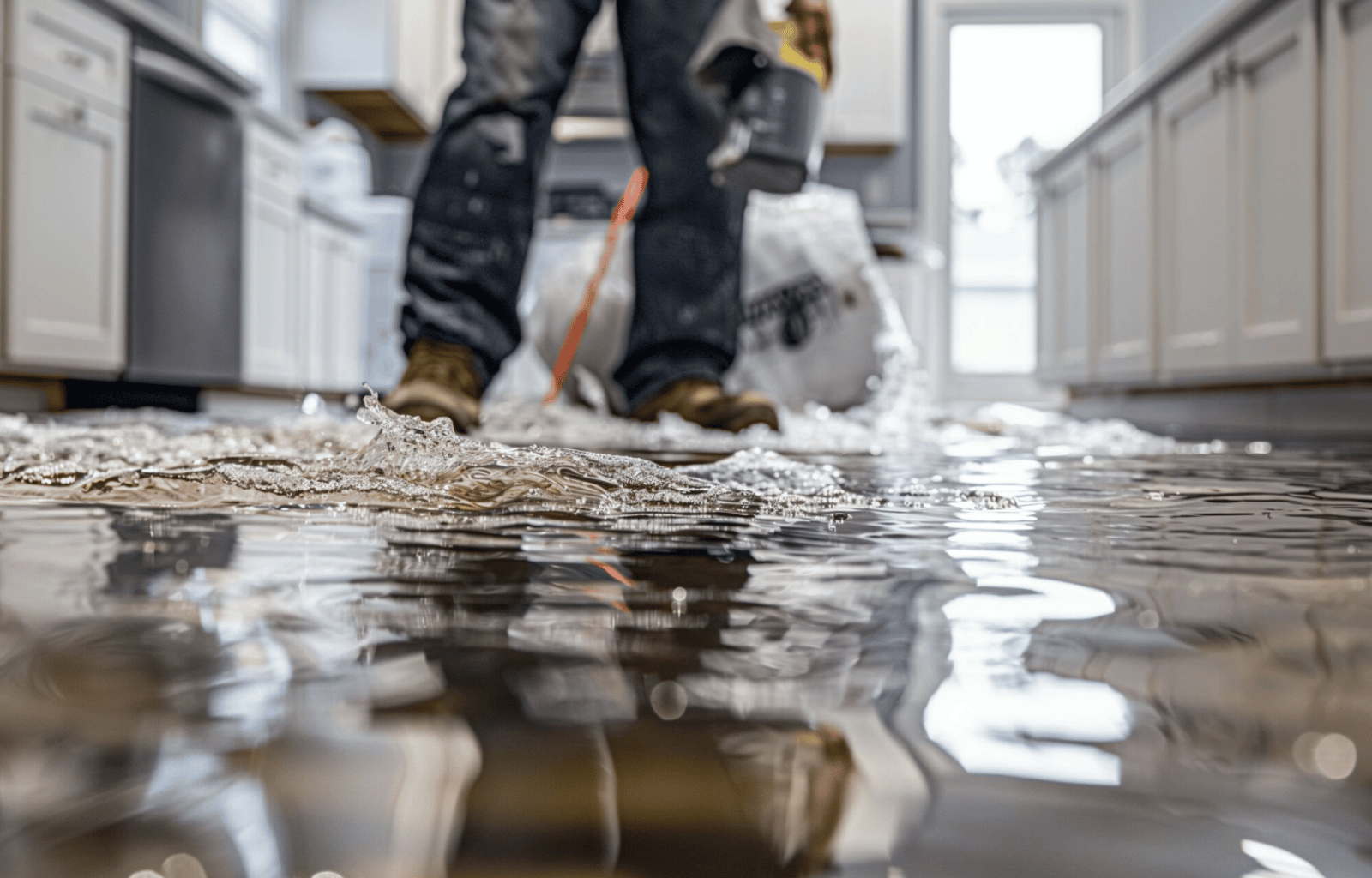
Water extraction is the process of physically removing standing water and excess moisture from your home using specialized equipment. It's the first and most time-sensitive step in responding to a water damage event. The goal of extraction is to remove as much water as possible as quickly as possible, before it migrates further into building materials, causes additional structural damage, or creates conditions for mold growth.
How Professional Water Extraction Works
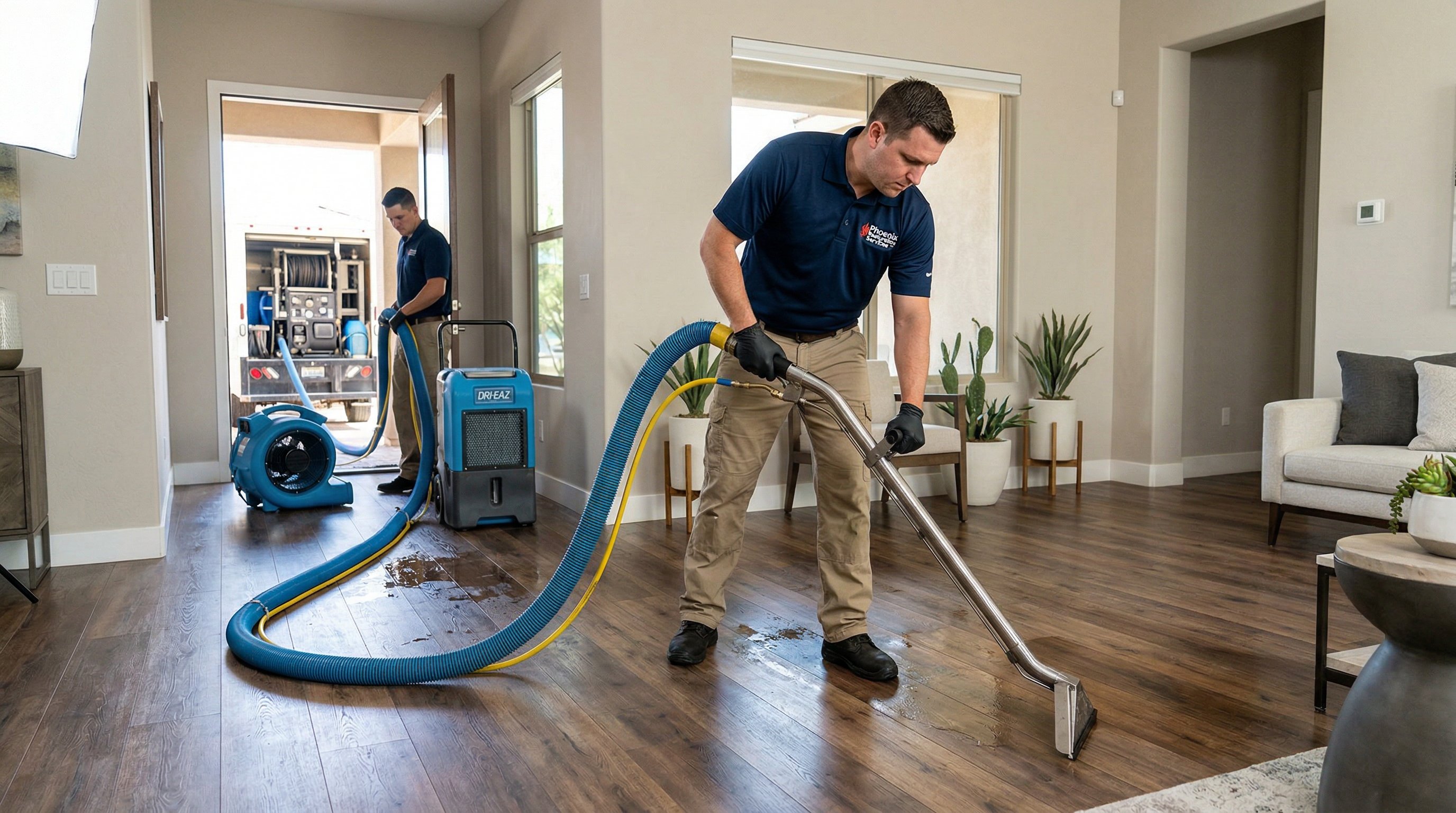
Professional water extraction services use industrial-grade equipment that is dramatically more powerful than any consumer equipment available for rent or purchase:
- Truck-mounted extraction units: The most powerful extraction systems are mounted in trucks or vans and connected to the home via long hoses. These units can extract hundreds of gallons of water per hour, making them ideal for large flooding events.
- Portable extraction units: Powerful portable units are used in areas where truck-mounted equipment cannot reach — upper floors, confined spaces, and rooms far from access points.
- Weighted extraction tools: For carpet and pad extraction, weighted floor tools apply pressure to compress the carpet and draw water out from deep within the fibers and backing.
- Specialty extraction attachments: Sub-floor extraction tools, cavity drying attachments, and other specialized tools address moisture in specific material assemblies.
What Extraction Does and Doesn't Do
It's important to understand the limits of water extraction. A professional extraction process removes free-standing water and excess moisture from accessible surfaces. It does NOT:
- Remove moisture that has already wicked into drywall, wood framing, insulation, and subfloor assemblies
- Dry wall cavities, ceiling cavities, or enclosed structural spaces
- Address mold or microbial contamination
- Restore damaged materials to their pre-loss condition
This is the critical distinction: extraction alone is not sufficient to complete water damage recovery. Even after thorough extraction, significant moisture remains within the structure of your home — and this residual moisture will cause progressive damage, structural deterioration, and mold growth if not addressed through the full restoration process.
What Is Water Damage Restoration?
Water damage restoration is the complete, multi-phase process of returning a water-damaged property to its pre-loss condition. It begins with emergency extraction but continues through structural drying, demolition, mold prevention, and ultimately reconstruction. Full water damage restoration is a professional service that combines technical expertise, specialized equipment, project management, and construction skills.
The Phases of Complete Water Damage Restoration
Phase 1: Emergency Response and Extraction
This is the phase that water extraction alone covers. The restoration team responds to your Phoenix home 24/7, assesses the damage, and deploys extraction equipment to remove standing water. Moisture mapping using thermal imaging and moisture meters documents the full extent of affected areas.
Phase 2: Structural Drying
After extraction, commercial dehumidifiers, air movers, and specialty drying equipment are deployed throughout the affected areas. This equipment stays in place for typically 3–7 days, running continuously to draw moisture out of structural materials. Daily moisture readings track progress and guide equipment adjustments. dehumidification-drying">Professional dehumidification and drying is the most technically complex phase of restoration and requires certified IICRC technicians to execute correctly.
Phase 3: Controlled Demolition (If Required)
Materials that cannot be effectively dried in place — heavily saturated drywall, contaminated carpet, swollen insulation — are removed during this phase. The goal is selective demolition that preserves everything salvageable while removing materials that would prevent adequate drying or pose mold/contamination risks if left in place.
Phase 4: Mold Prevention and Remediation
EPA-registered antimicrobial treatments are applied to prevent mold growth during and after the drying process. If mold is already present, formal mold remediation following IICRC S520 standards is required before restoration can proceed. Phoenix's warm climate makes this phase especially important — mold can begin growing within 24–48 hours of a water event. See our post on how fast mold grows after water damage in Phoenix for details.
Phase 5: Reconstruction
Once drying is complete and verified, the reconstruction phase restores your home's finishes, systems, and structures to pre-loss condition. This includes installing new drywall, replacing flooring, repainting, replacing trim and fixtures, and any other work required to return the home to its original or better condition. Many Phoenix homeowners appreciate working with a single company that handles both the restoration and reconstruction phases — it eliminates coordination delays and accountability gaps between contractors.
When You Need Only Extraction vs. Full Restoration
There are a few scenarios where extraction alone — without the full restoration process — might be all that's immediately needed. However, these situations are less common than many homeowners assume:
- Purely surface water on non-porous hard flooring: If clean water (Category 1) has pooled on tile or sealed concrete and has been present for less than an hour without any contact with walls, carpet, or other porous materials, thorough extraction and surface drying with air movers may be sufficient.
- Very small, contained events: A small appliance drip that wet a 2-square-foot area of linoleum, caught within minutes, may not require full structural drying.
In virtually any other scenario — any water that has contacted carpet, drywall, wood framing, or any other porous material; any event involving more than a few gallons of water; any Category 2 or 3 event — full restoration services including structural drying are necessary. The fact that a surface looks or feels dry after extraction is not evidence that the underlying materials have been adequately dried.
The Role of Extraction in Insurance Claims
When you file an insurance claim for water damage in Phoenix, your insurance adjuster will typically want to see documentation of both the extraction and restoration phases. Professional restoration companies provide:
- Initial moisture mapping reports documenting all affected areas at the time of response
- Equipment logs showing type, quantity, and placement of extraction and drying equipment
- Daily moisture readings demonstrating drying progress
- Final moisture readings confirming completion of structural drying
- Scope of work and cost documentation for all restoration phases
This documentation chain is essential for a successful insurance claim and is one of the key advantages of working with a professional restoration company versus attempting DIY extraction. Our team provides complete, IICRC-standard documentation at every phase of the restoration process. Read our post on does insurance cover water damage in Phoenix for more context.
Choosing a Phoenix Water Damage Company: Extraction Only vs. Full Restoration
Some companies advertise as "water extraction" companies and do not perform the full restoration process. These companies may handle the emergency extraction phase and then refer you to a general contractor for the drying and reconstruction phases. This can create gaps in accountability and documentation that complicate insurance claims and increase total project time.
A full-service water damage restoration company like Phoenix Water Damage Restoration handles all phases under one roof — from emergency extraction through final reconstruction. This integrated approach provides:
- Single point of accountability for the entire project
- Seamless documentation chain for insurance purposes
- Faster total project completion due to eliminated handoff delays
- Better outcomes because the team that extracts also monitors drying and makes decisions about what materials can be saved vs. must be removed
Q&A: Water Extraction vs. Restoration
How quickly should water extraction begin after flooding?
Water extraction should begin as soon as possible — within hours of a flooding event. For every hour that extraction is delayed, water migrates further into building materials, increasing the total scope and cost of restoration. Our Phoenix team responds 24/7 for emergency extraction calls.
Can I rent an extractor from a hardware store and skip professional services?
Consumer extractors available at hardware stores are significantly less powerful than professional equipment and cannot extract water from below the surface of carpet, from wall cavities, or from subfloor assemblies. For minor surface water events, a consumer unit may help, but for any event involving significant water volume or contact with porous materials, professional extraction is strongly recommended.
Does water extraction include drying?
Water extraction removes standing water; it does not dry structural materials. Structural drying — using commercial dehumidifiers and air movers — is a separate phase of the restoration process that begins after extraction and continues for several days.
Is water damage restoration the same as water damage mitigation?
Not exactly. Water damage mitigation refers specifically to the emergency response steps taken to stop damage from getting worse — including extraction, temporary protections, and initial drying setup. Restoration is the broader process that includes mitigation plus all subsequent work to return the property to its pre-loss condition, including reconstruction. See our post on water damage mitigation for more detail on this distinction.
What if I only get extraction but not the full restoration process?
If you receive extraction without full structural drying and restoration, you risk ongoing moisture damage to building materials, mold growth within 24–48 hours in Phoenix's warm climate, and potential structural deterioration. These outcomes are far more expensive to address after the fact than if the complete restoration process is performed promptly following the initial water event.
Don't Stop at Extraction — Get the Full Picture
Water extraction is an essential first step, but it's just the beginning of what your Phoenix home needs after a water damage event. Understanding that extraction is only one phase of a multi-step restoration process helps you make better decisions about who to hire and what to expect from the recovery timeline.
Phoenix Water Damage Restoration is a trusted choice for commercial & residential water damage restoration in Phoenix, AZ, delivering fast response times, expert drying, and full-service restoration. Our integrated approach covers every phase from initial extraction through final reconstruction. Call Us 24/7: (623) 300-3108
Easy steps to create a color palette
Lorem ipsum dolor sit amet, consectetur adipiscing elit lobortis arcu enim urna adipiscing praesent velit viverra sit semper lorem eu cursus vel hendrerit elementum morbi curabitur etiam nibh justo, lorem aliquet donec sed sit mi dignissim at ante massa mattis.
- Neque sodales ut etiam sit amet nisl purus non tellus orci ac auctor
- Adipiscing elit ut aliquam purus sit amet viverra suspendisse potent
- Mauris commodo quis imperdiet massa tincidunt nunc pulvinar
- Excepteur sint occaecat cupidatat non proident sunt in culpa qui officia
What is a color palette?
Vitae congue eu consequat ac felis placerat vestibulum lectus mauris ultrices cursus sit amet dictum sit amet justo donec enim diam porttitor lacus luctus accumsan tortor posuere praesent tristique magna sit amet purus gravida quis blandit turpis.

Don’t overspend on growth marketing without good retention rates
At risus viverra adipiscing at in tellus integer feugiat nisl pretium fusce id velit ut tortor sagittis orci a scelerisque purus semper eget at lectus urna duis convallis porta nibh venenatis cras sed felis eget neque laoreet suspendisse interdum consectetur libero id faucibus nisl donec pretium vulputate sapien nec sagittis aliquam nunc lobortis mattis aliquam faucibus purus in.
- Neque sodales ut etiam sit amet nisl purus non tellus orci ac auctor
- Adipiscing elit ut aliquam purus sit amet viverra suspendisse potenti
- Mauris commodo quis imperdiet massa tincidunt nunc pulvinar
- Adipiscing elit ut aliquam purus sit amet viverra suspendisse potenti
What’s the ideal customer retention rate?
Nisi quis eleifend quam adipiscing vitae aliquet bibendum enim facilisis gravida neque euismod in pellentesque massa placerat volutpat lacus laoreet non curabitur gravida odio aenean sed adipiscing diam donec adipiscing tristique risus amet est placerat in egestas erat.
“Lorem ipsum dolor sit amet consectetur adipiscing elit, sed do eiusmod tempor incididunt ut labore et dolore magna aliqua enim ad minim veniam.”
Next steps to increase your customer retention
Eget lorem dolor sed viverra ipsum nunc aliquet bibendum felis donec et odio pellentesque diam volutpat commodo sed egestas aliquam sem fringilla ut morbi tincidunt augue interdum velit euismod eu tincidunt tortor aliquam nulla facilisi aenean sed adipiscing diam donec adipiscing ut lectus arcu bibendum at varius vel pharetra nibh venenatis cras sed felis eget.