
How Phoenix's Desert Climate Affects Water Damage and Drying Time
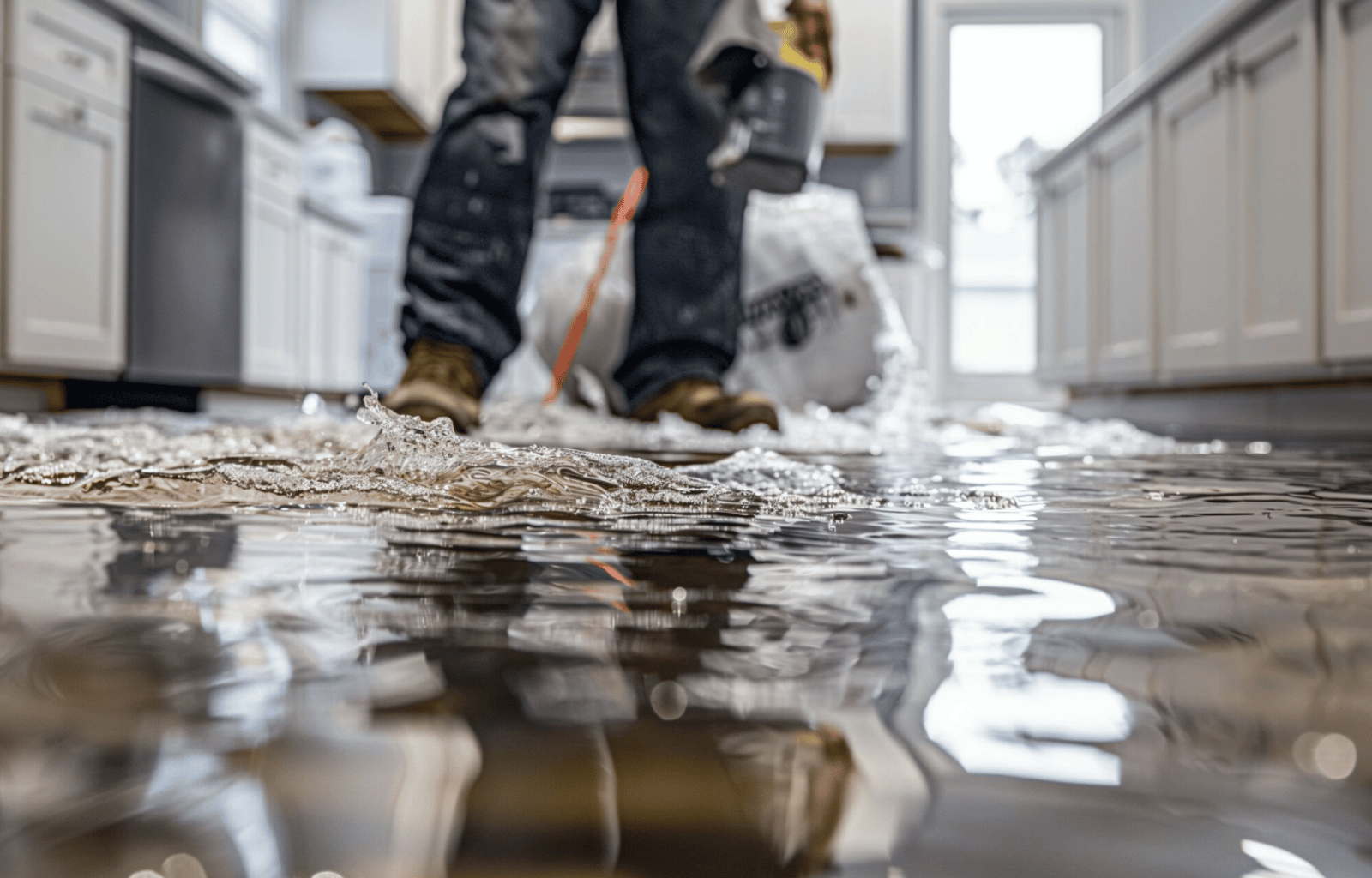
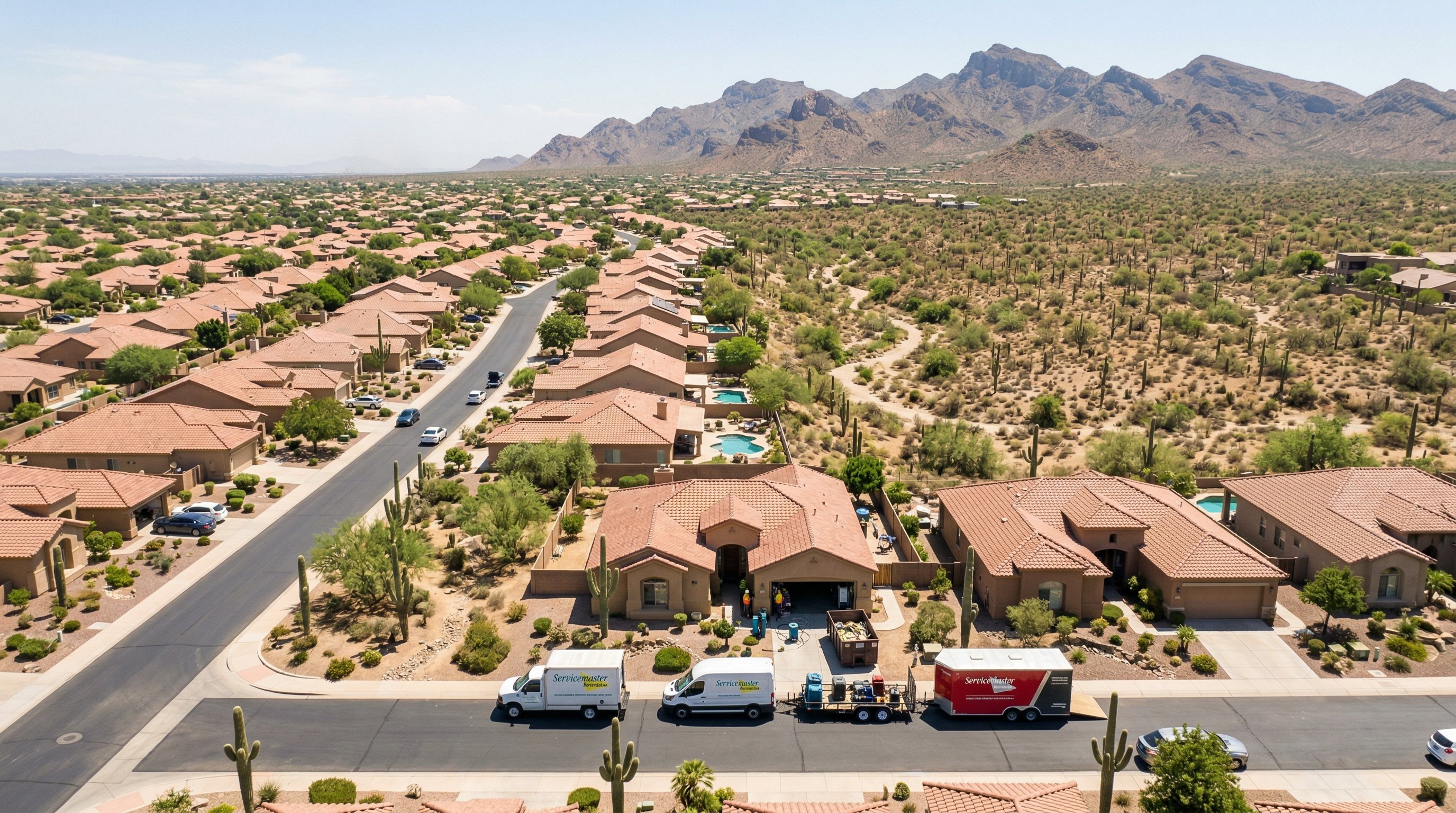
When it comes to water damage restoration, most industry standards were developed with average U.S. climate conditions in mind. Phoenix, AZ operates in a radically different environment than the national average — and that difference has significant implications for how water damage behaves, how quickly things dry, and what strategies professional restoration teams use to achieve optimal results.
At first glance, Phoenix's famous low humidity might seem like an advantage for drying. And in some respects, it is. But the full picture is considerably more complex. Phoenix's extreme temperatures, dense stucco construction, concrete slab foundations, and the dramatic humidity swings of monsoon season all create drying challenges that require specialized knowledge and equipment. This guide explores exactly how Phoenix's desert climate shapes the water damage restoration process — and what that means for homeowners dealing with a water event.
The Humidity Advantage: How Low Desert Humidity Aids Drying
The fundamental principle of structural drying is vapor pressure differential — wet materials dry faster when the surrounding air has a low moisture content (low relative humidity). When a wet surface and dry air come into contact, moisture migrates from the wetter material into the drier air. The greater the difference in moisture content between the material and the air, the faster this migration happens.
In Phoenix, where relative humidity outside monsoon season commonly hovers between 10% and 30%, the potential for rapid moisture migration from wet materials into the air is significant. A professional restoration team can leverage this naturally dry air by introducing it into the drying zone — using ventilation strategies that supplement commercial dehumidifiers with outdoor air intake during appropriate conditions. This can meaningfully compress drying timelines compared to what would be achievable in more humid climates like Florida or the Gulf Coast.
When Low Humidity Helps Most
The low-humidity drying advantage is most pronounced for:
- Surface-level moisture on hard, non-porous materials
- Lightly saturated drywall
- Wet carpet and pad (if not contaminated)
- Mildly affected wood flooring
In these scenarios, Phoenix's dehumidification-drying">dehumidification and drying process can sometimes be completed 20–40% faster than in more humid climates, all else being equal.
The Challenges: When Desert Climate Complicates Drying
While low humidity helps on paper, several factors specific to Phoenix's climate and construction practices can offset or eliminate this advantage — and in some cases make drying more challenging than in typical environments.
Concrete Slab Foundations: A Slow-Drying Mass
The overwhelming majority of Phoenix homes are built on concrete slab foundations rather than the wood-framed crawl space or basement foundations common in other regions. Concrete is a highly porous, moisture-retentive material — and a flooded slab can hold enormous amounts of water. Concrete dries extremely slowly even in ideal conditions. In a serious flood event, Phoenix's concrete slab foundation may take 2–4 weeks or longer to dry to acceptable moisture content levels, even with professional drying equipment deployed.
This is particularly important because flooring materials — tile, hardwood, vinyl plank — cannot be reinstalled over a wet slab. The slab must fully dry before any floor covering is replaced, which often determines the overall project timeline rather than the drywall or framing drying schedule. Our team uses specialized slab drying systems and moisture mapping to track slab moisture progress throughout the drying process.
Stucco Construction: Hidden Moisture Traps
Phoenix homes are predominantly constructed with exterior stucco walls. While stucco is durable and well-suited to the desert climate in normal conditions, it presents unique challenges in water damage situations. Stucco's dense, relatively impermeable surface can trap moisture within wall cavities for extended periods. If water has infiltrated the wall assembly through a roof leak, a broken pipe, or monsoon flooding, it may be invisible from the exterior while actively causing damage to the framing and drywall on the interior side of the wall.
Professional technicians use thermal imaging and calibrated moisture meters to detect moisture trapped within stucco wall assemblies — equipment that is absolutely essential in Phoenix's stucco-dominated housing stock.
Monsoon Season Humidity Spikes
Phoenix's monsoon season (June–September) brings dramatic, temporary spikes in relative humidity that directly counteract the drying advantage described above. During the most intense monsoon periods, Phoenix's humidity can rise from its typical desert low into the 50–80% range during and immediately after storm events. When outdoor humidity is that high, introducing outside air into the drying zone would actively slow — not speed — the drying process.
During monsoon season, professional restoration teams shift strategy: rather than leveraging outside air, they fully close the drying zone and rely exclusively on commercial refrigerant and desiccant dehumidifiers to control internal humidity. This is a different operating mode that requires more powerful equipment and more intensive monitoring. Homeowners who attempt DIY drying with box fans and open windows during monsoon season are often inadvertently making their moisture problem worse.
Extreme Heat: Accelerating Microbial Growth
Phoenix's extreme summer heat — with temperatures regularly above 105°F outdoors and potentially higher in unventilated attics and confined spaces — accelerates mold growth dramatically. Mold thrives in warm, moist conditions. While Phoenix's low humidity outside of monsoon season inhibits mold during normal conditions, combine Phoenix summer heat with water damage and you have a recipe for rapid, aggressive mold colonization. Professional restoration teams in Phoenix work with heightened urgency on mold prevention protocols — including aggressive extraction, antimicrobial treatment, and targeted drying — during summer months.
For more on this risk, see our detailed post on how fast mold grows after water damage in Phoenix.
How Professional Phoenix Restoration Teams Adapt Their Approach
The unique climate conditions of Phoenix, AZ require restoration professionals to adapt their standard drying protocols in several important ways:
Psychrometric Calculations for Desert Conditions
Professional water damage restoration is a science, not a trade. Certified IICRC technicians use psychrometric calculations — mathematical formulas that account for temperature, relative humidity, and vapor pressure — to determine optimal equipment placement, airflow rates, and dehumidification capacity for any given drying situation. In Phoenix, these calculations must account for the region's unique temperature and humidity profiles to produce accurate drying plans.
Equipment Selection for Phoenix's Extremes
Not all dehumidifiers perform equally across temperature ranges. Standard refrigerant-based dehumidifiers become significantly less efficient in very hot conditions — their internal cooling coils must work harder in a 110°F environment than in a 70°F one. Phoenix restoration teams address this by using high-capacity commercial units designed for high-temperature operation, and by supplementing with desiccant dehumidifiers in challenging situations. Our fleet of professional drying equipment is selected specifically for Phoenix's demanding climate conditions.
Slab Drying Systems
For water damage involving concrete slabs, specialized slab drying systems — including mat systems that are placed directly on the concrete surface and draw moisture out through suction — are used to accelerate a process that would otherwise take weeks. These systems are standard practice for Phoenix restoration but less commonly needed in areas where homes are built on crawl spaces or basements.
Daily Monitoring and Adjustment
Phoenix's weather can change dramatically from day to day, especially during monsoon season. A drying plan that is effective on a dry desert day may need to be significantly adjusted when monsoon humidity spikes arrive. Professional teams take daily humidity, temperature, and material moisture readings and adjust equipment configuration and ventilation strategy accordingly.
DIY Drying in Phoenix: What You Can and Cannot Do
Phoenix homeowners sometimes attempt to manage drying on their own using consumer equipment. Here's an honest assessment of what works and what doesn't in our climate:
- Box fans: Can help circulate air over wet hard surfaces during dry weather outside monsoon season. Ineffective for wall cavities, subflooring, or any enclosed material assembly.
- Consumer dehumidifiers: A standard home dehumidifier removes 30–70 pints of water per day. Professional units remove 100–200+ pints per day. For most water damage scenarios in Phoenix, consumer equipment is insufficient to achieve the drying rates required to prevent mold growth.
- Opening windows: Helpful during dry desert conditions outside monsoon season; counterproductive during monsoon humidity spikes.
For anything beyond a very minor, surface-level water event, professional water damage restoration services are strongly recommended in Phoenix's complex climate environment. The risks of inadequate drying — mold, structural damage, insurance claim complications — are too significant to take chances.
Q&A: Phoenix Climate and Water Damage Drying
Does Phoenix's dry climate mean water damage dries on its own?
Not reliably. While surface moisture may evaporate quickly in dry desert air, moisture trapped within walls, under flooring, and in concrete slabs does not self-resolve at adequate rates to prevent mold and structural damage. Structural drying requires professional equipment to address moisture in enclosed material assemblies.
Is drying faster in Phoenix than in other cities?
For surface-level water and during non-monsoon months, drying can be faster in Phoenix due to lower ambient humidity. However, concrete slab construction, stucco walls, and monsoon-season humidity spikes often offset this advantage for more significant water damage events.
How do monsoon storms affect restoration timelines?
Monsoon-related floods occur during the highest-humidity months in Phoenix. This means drying conditions are less favorable, and more intensive dehumidification equipment is required. Projects that occur during monsoon season may take 1–2 additional days compared to the same project scope in dry winter months.
What is the target moisture content for structural wood in Phoenix?
IICRC S500 standards specify that structural wood should be dried to a moisture content within normal range for the local climate — typically 8–13% for interior wood in Phoenix's dry climate. Our team uses calibrated moisture meters and follows IICRC protocols for determining when drying is complete.
Can the concrete slab in my Phoenix home cause ongoing moisture problems?
Yes. Concrete slabs in Phoenix homes can retain moisture for extended periods, and if a floor covering is reinstalled over a slab that hasn't fully dried, it can trap moisture that leads to adhesive failure, flooring damage, and mold growth under the covering. Always insist on complete slab drying verification before new flooring is installed. Our moisture mapping services provide the documentation you need to confirm complete drying.
Trust Phoenix's Climate Experts
Water damage restoration in Phoenix requires professionals who truly understand the local climate — not a national franchise that applies a generic template to every project. Our team has deep experience with Phoenix's unique combination of desert dryness, extreme heat, monsoon humidity, slab construction, and stucco exteriors. We calibrate every drying plan to current local conditions and adjust in real time to deliver the fastest, most complete drying outcomes available.
Phoenix Water Damage Restoration is a trusted choice for commercial & residential water damage restoration in Phoenix, AZ, delivering fast response times, expert drying, and full-service restoration. Call Us 24/7: (623) 300-3108
Easy steps to create a color palette
Lorem ipsum dolor sit amet, consectetur adipiscing elit lobortis arcu enim urna adipiscing praesent velit viverra sit semper lorem eu cursus vel hendrerit elementum morbi curabitur etiam nibh justo, lorem aliquet donec sed sit mi dignissim at ante massa mattis.
- Neque sodales ut etiam sit amet nisl purus non tellus orci ac auctor
- Adipiscing elit ut aliquam purus sit amet viverra suspendisse potent
- Mauris commodo quis imperdiet massa tincidunt nunc pulvinar
- Excepteur sint occaecat cupidatat non proident sunt in culpa qui officia
What is a color palette?
Vitae congue eu consequat ac felis placerat vestibulum lectus mauris ultrices cursus sit amet dictum sit amet justo donec enim diam porttitor lacus luctus accumsan tortor posuere praesent tristique magna sit amet purus gravida quis blandit turpis.

Don’t overspend on growth marketing without good retention rates
At risus viverra adipiscing at in tellus integer feugiat nisl pretium fusce id velit ut tortor sagittis orci a scelerisque purus semper eget at lectus urna duis convallis porta nibh venenatis cras sed felis eget neque laoreet suspendisse interdum consectetur libero id faucibus nisl donec pretium vulputate sapien nec sagittis aliquam nunc lobortis mattis aliquam faucibus purus in.
- Neque sodales ut etiam sit amet nisl purus non tellus orci ac auctor
- Adipiscing elit ut aliquam purus sit amet viverra suspendisse potenti
- Mauris commodo quis imperdiet massa tincidunt nunc pulvinar
- Adipiscing elit ut aliquam purus sit amet viverra suspendisse potenti
What’s the ideal customer retention rate?
Nisi quis eleifend quam adipiscing vitae aliquet bibendum enim facilisis gravida neque euismod in pellentesque massa placerat volutpat lacus laoreet non curabitur gravida odio aenean sed adipiscing diam donec adipiscing tristique risus amet est placerat in egestas erat.
“Lorem ipsum dolor sit amet consectetur adipiscing elit, sed do eiusmod tempor incididunt ut labore et dolore magna aliqua enim ad minim veniam.”
Next steps to increase your customer retention
Eget lorem dolor sed viverra ipsum nunc aliquet bibendum felis donec et odio pellentesque diam volutpat commodo sed egestas aliquam sem fringilla ut morbi tincidunt augue interdum velit euismod eu tincidunt tortor aliquam nulla facilisi aenean sed adipiscing diam donec adipiscing ut lectus arcu bibendum at varius vel pharetra nibh venenatis cras sed felis eget.