

Every year, from late June through September, Phoenix, AZ experiences one of the most dramatic seasonal weather transitions in the United States. The Phoenix monsoon season brings sudden, violent thunderstorms capable of dropping more than an inch of rain in less than an hour — in a city whose infrastructure and landscaping are built for desert conditions. The result: flooded streets, overwhelmed drainage systems, and thousands of homes experiencing water damage that could have been prevented or minimized with the right preparation.
This guide gives Phoenix homeowners a comprehensive, actionable plan for preventing water damage during monsoon season — covering everything from exterior preparation to interior safeguards and emergency response planning.
Understanding What Makes Phoenix Monsoon Season So Damaging
The North American Monsoon is a seasonal shift in wind patterns that pulls moisture northward from the Gulf of California and Gulf of Mexico. When this moisture collides with Arizona's intense summer heat, it creates spectacular — and destructive — thunderstorm activity. Phoenix monsoon storms are characterized b
Understanding these specific hazards helps you prioritize the right prevention measures for your Phoenix home.
Pre-Monsoon Exterior Preparation
1. Inspect and Repair Your Roof
Your roof is your home's primary defense against monsoon rain. A roof that handles normal Arizona weather may leak under the concentrated intensity of a monsoon storm. Before monsoon season begins (ideally in May or early June), schedule a professional roof leak inspection to identify and address
Even minor roofing defects can become significant leak points under the sustained, heavy rain of a monsoon storm. Our roof leak repair services address these vulnerabilities before they become interior water damage emergencies.
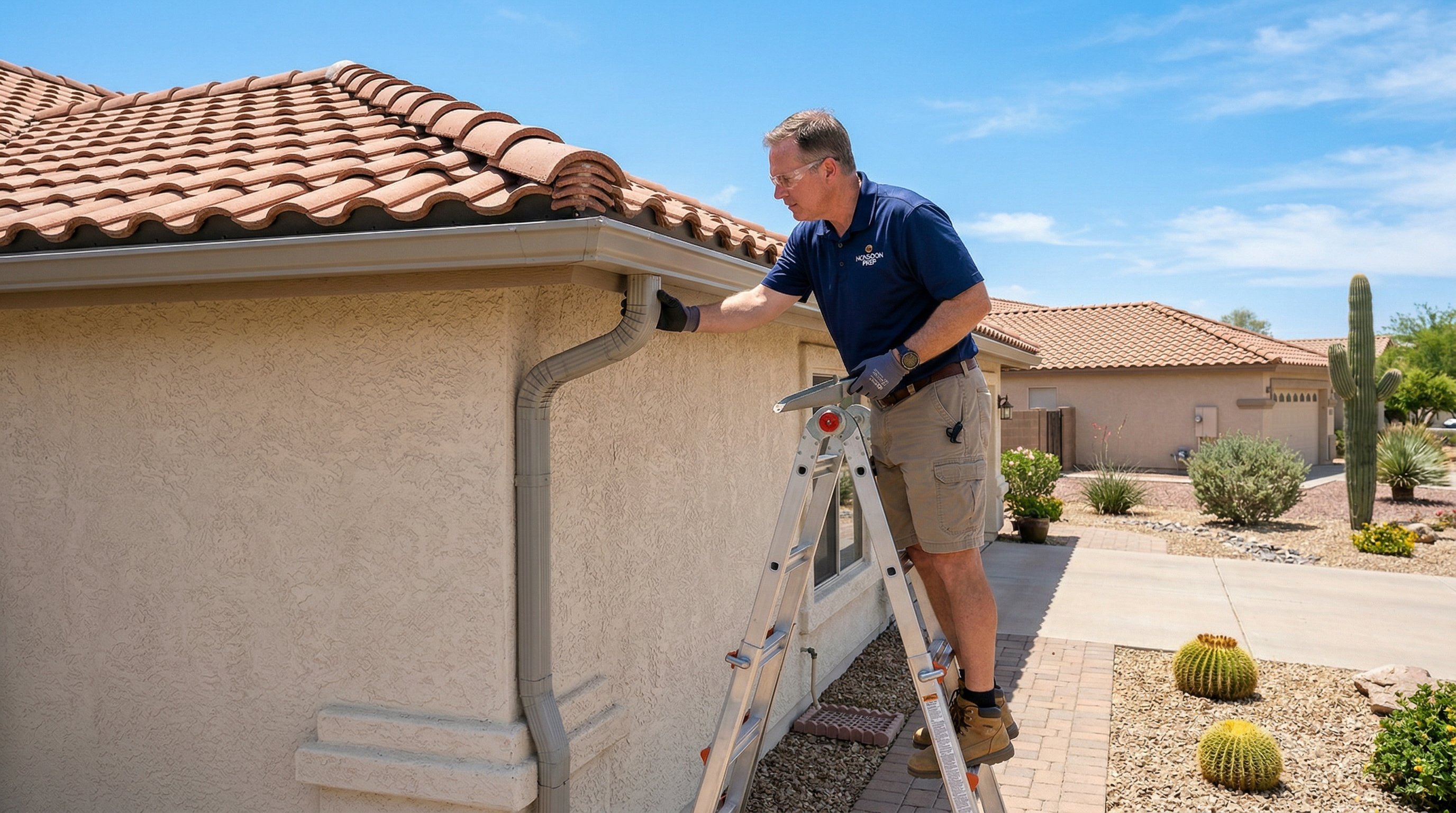
2. Clean and Inspect Your Gutters and Downspouts
Haboobs deposit enormous quantities of dust, debris, and dried organic matter in gutters throughout the late spring. By the time monsoon season begins, gutters in Phoenix homes are often significantly obstructed. Clogged gutters during a heavy rain event can overflow, directing water against fascia boards, soffits, and exterior walls — and eventually into the home.
Clean gutters thoroughly before monsoon season and confirm that all downspouts discharge at least 6 feet away from your foundation. Downspouts that terminate at the foundation create exactly the conditions for foundation water intrusion and basement or crawl space flooding.
3. Assess Your Yard's Drainage Patterns
Water should flow away from your home — always. Walk your yard after a garden hose test and look for areas where water pools or flows toward the foundation. Common drainage problems in Phoenix yards include:
Our exterior drainage solutions services can correct grading and drainage problems before monsoon season creates a flooding emergency. This is one of the highest-value investments Phoenix homeowners can make for long-term water damage prevention.
4. Seal Foundation Cracks and Vulnerable Entry Points
Monsoon-season water often finds its way into homes through foundation cracks, utility penetrations, window wells, and gaps around doors. Before monsoon season
5. Trim Trees and Secure Outdoor Items
Monsoon winds routinely exceed 50 mph. Overhanging tree branches can break and puncture roofing or siding. Large trees near the house should be assessed for structural integrity and problematic branches. Additionally, secure or store any outdoor furniture, umbrellas, potted plants, and decorative items that could become airborne projectiles in high winds.
Pre-Monsoon Interior Preparation
6. Inspect Attic Ventilation and Insulation
Proper attic ventilation prevents moisture accumulation that can lead to ceiling damage, mold growth, and wood rot in roof framing. Check attic vents to confirm they're unobstructed, and inspect insulation for any existing moisture damage from previous seasons. Our attic leak repair service can address insulation and ventilation issues before they compound during monsoon season.
7. Service Your HVAC System and Condensate Drain Lines
Air conditioning systems run almost continuously during Phoenix's summer months. HVAC condensate lines that are partially clogged at the start of monsoon season — when heat and humidity are highest — are prime candidates for overflow during a heavy-use storm event. Have your HVAC serviced and condensate lines flushed each spring as a standard maintenance item.
8. Check All Supply Line Connections
Braided stainless steel supply line hoses connect water supplies to toilets, sinks, dishwashers, washing machines, and refrigerators throughout your home. These hoses have a service life of approximately 5 years. Check them all for bulging, cracking, or mineral deposits at connection points. Replace any that show wear — an overnight supply line failure can discharge hundreds of gallons into your home before you notice.
9. Know Where Your Water Shutoff Valves Are
In a water damage emergency, speed matters. Make sure every adult in your household knows where the main water shutoff valve is located (typically near the water meter, often in a utility box near the street in Phoenix homes). Also locate individual shutoff valves for toilets, sinks, and appliances so you can isolate a leak quickly.
Storm-Season Monitoring and Response
10. Monitor Weather Alerts
The National Weather Service issues flash flood watches and warnings throughout Phoenix monsoon season. Sign up for Maricopa County emergency alerts and download a weather app that provides severe thunderstorm and flash flood notifications. When a significant storm is approaching, take 10 minutes to confirm your exterior preparations are in place and move valuables away from any area of your home where past water intrusion has occurred.
11. Prepare an Emergency Water Damage Response Plan
Know what you'll do in the first 30 minutes after you discover water damage. A simple plan includes:
For a detailed guide on what to do in those critical first hours, see our post on what to do after water damage in Phoenix, AZ
12. Keep Emergency Supplies on Hand
Consider keeping a small emergency supply of water damage response items in an accessible location:
High-Risk Areas in Phoenix Homes During Monsoon Season
Certain areas of Phoenix homes are especially vulnerable during monsoon events. Pay extra attention to:
Flat Roofs
Many older Phoenix homes feature flat or low-slope roofing. These roofs are particularly vulnerable to ponding water when drains are clogged or roof membranes are compromised. A flat roof inspection and drain clearing before monsoon season is essential.
Block Wall Foundations
Concrete masonry unit (CMU) block foundations common in Phoenix can absorb and transmit water through mortar joints during sustained flooding events. waterproofing">Waterproofing treatments on exterior block walls significantly reduce this risk.
Window Wells and Below-Grade Openings
Any opening below grade level — including window wells and utility penetrations — becomes a potential water intrusion point when surface flooding occurs during intense monsoon rain. Window well covers and proper gravel drainage within the well are simple, effective protective measures.
Crawl Spaces
Phoenix homes with crawl spaces are particularly vulnerable to moisture intrusion during monsoon season. Wet crawl spaces create conditions for mold, pest infestations, and structural damage. Crawl space encapsulation and vapor barrier installation are long-term solutions that dramatically reduce crawl space moisture risk year-round.
What to Do If Your Home Floods During a Monsoon
Even the best-prepared Phoenix home can experience water intrusion during an extreme monsoon event. If it happens:
Phoenix Water Damage Restoration provides 24/7 emergency response throughout monsoon season. Our team is equipped for rapid deployment across Phoenix, AZ to begin water extraction and mitigation the same day you call.
The Cost of Not Preparing: What Monsoon Water Damage Can Do to Your Home
Homeowners who don't prepare for monsoon season often discover just how quickly water damage can escalate. A single monsoon storm can cause
The cost of professional restoration after a significant monsoon flooding event frequently runs into the tens of thousands of dollars. The cost of pre-season preparation is a fraction of that — and in most cases, the investment in prevention protects both your property and your peace of mind throughout monsoon season.
Frequently Asked Questions
When does Phoenix monsoon season officially start and end?
The National Weather Service defines the Arizona monsoon season as June 15 through September 30. However, significant monsoon storms often occur through early October. Phoenix homeowners should have their pre-monsoon preparations complete by mid-June each year.
Does standard homeowner's insurance cover monsoon flood damage in Phoenix?
It depends on the type of flooding. Sudden and accidental water damage from a monsoon — such as a roof leak or wind-driven rain that enters through a damaged roof — is typically covered. Flooding from rising water outside the home (flash flooding, overland flow) generally requires a separate flood insurance policy through the National Flood Insurance Program (NFIP) or a private flood insurer. Check your policy now, before monsoon season, to understand what you have.
What's the most common cause of water damage to Phoenix homes during monsoon season?
Roof leaks are the most common source of interior water damage during Phoenix monsoon events, followed by surface flooding that enters through doors, window wells, and foundation gaps. HVAC condensate overflows also spike significantly during monsoon season when systems run constantly and humidity is elevated.
How long does it take for mold to grow after monsoon flood damage?
In Phoenix's heat, mold can begin colonizing within 24 to 48 hours of water exposure. This makes immediate response after any monsoon-related water intrusion critical. Every hour of delay increases mold risk and restoration cost.
Is it worth waterproofing my Phoenix home before monsoon season?
Absolutely. Foundation waterproofing, exterior drainage improvements, and crawl space encapsulation are investments that protect your home not just during one monsoon season, but year after year. For most Phoenix homeowners, the cost of waterproofing is far less than the cost of a single significant flood restoration event.
Start Preparing Before the First Storm Hits
The best time to prepare your Phoenix home for monsoon season is before the season arrives — not in the middle of a storm. Use this guide as your seasonal preparation checklist, and don't hesitate to call a professional for inspections, drainage work, waterproofing, or any service that's beyond comfortable DIY territory.
If you'd like a professional assessment of your home's monsoon vulnerability, request a quote from Phoenix Water Damage Restoration. And if a monsoon storm has already caused damage, we're available around the clock to respond fast.
Phoenix Water Damage Restoration is a trusted choice for commercial & residential water damage restoration in Phoenix, AZ, delivering fast response times, expert drying, and full-service restoration.
Call Us 24/7: (623) 300-3108
Easy steps to create a color palette
Lorem ipsum dolor sit amet, consectetur adipiscing elit lobortis arcu enim urna adipiscing praesent velit viverra sit semper lorem eu cursus vel hendrerit elementum morbi curabitur etiam nibh justo, lorem aliquet donec sed sit mi dignissim at ante massa mattis.
- Neque sodales ut etiam sit amet nisl purus non tellus orci ac auctor
- Adipiscing elit ut aliquam purus sit amet viverra suspendisse potent
- Mauris commodo quis imperdiet massa tincidunt nunc pulvinar
- Excepteur sint occaecat cupidatat non proident sunt in culpa qui officia
What is a color palette?
Vitae congue eu consequat ac felis placerat vestibulum lectus mauris ultrices cursus sit amet dictum sit amet justo donec enim diam porttitor lacus luctus accumsan tortor posuere praesent tristique magna sit amet purus gravida quis blandit turpis.

Don’t overspend on growth marketing without good retention rates
At risus viverra adipiscing at in tellus integer feugiat nisl pretium fusce id velit ut tortor sagittis orci a scelerisque purus semper eget at lectus urna duis convallis porta nibh venenatis cras sed felis eget neque laoreet suspendisse interdum consectetur libero id faucibus nisl donec pretium vulputate sapien nec sagittis aliquam nunc lobortis mattis aliquam faucibus purus in.
- Neque sodales ut etiam sit amet nisl purus non tellus orci ac auctor
- Adipiscing elit ut aliquam purus sit amet viverra suspendisse potenti
- Mauris commodo quis imperdiet massa tincidunt nunc pulvinar
- Adipiscing elit ut aliquam purus sit amet viverra suspendisse potenti
What’s the ideal customer retention rate?
Nisi quis eleifend quam adipiscing vitae aliquet bibendum enim facilisis gravida neque euismod in pellentesque massa placerat volutpat lacus laoreet non curabitur gravida odio aenean sed adipiscing diam donec adipiscing tristique risus amet est placerat in egestas erat.
“Lorem ipsum dolor sit amet consectetur adipiscing elit, sed do eiusmod tempor incididunt ut labore et dolore magna aliqua enim ad minim veniam.”
Next steps to increase your customer retention
Eget lorem dolor sed viverra ipsum nunc aliquet bibendum felis donec et odio pellentesque diam volutpat commodo sed egestas aliquam sem fringilla ut morbi tincidunt augue interdum velit euismod eu tincidunt tortor aliquam nulla facilisi aenean sed adipiscing diam donec adipiscing ut lectus arcu bibendum at varius vel pharetra nibh venenatis cras sed felis eget.