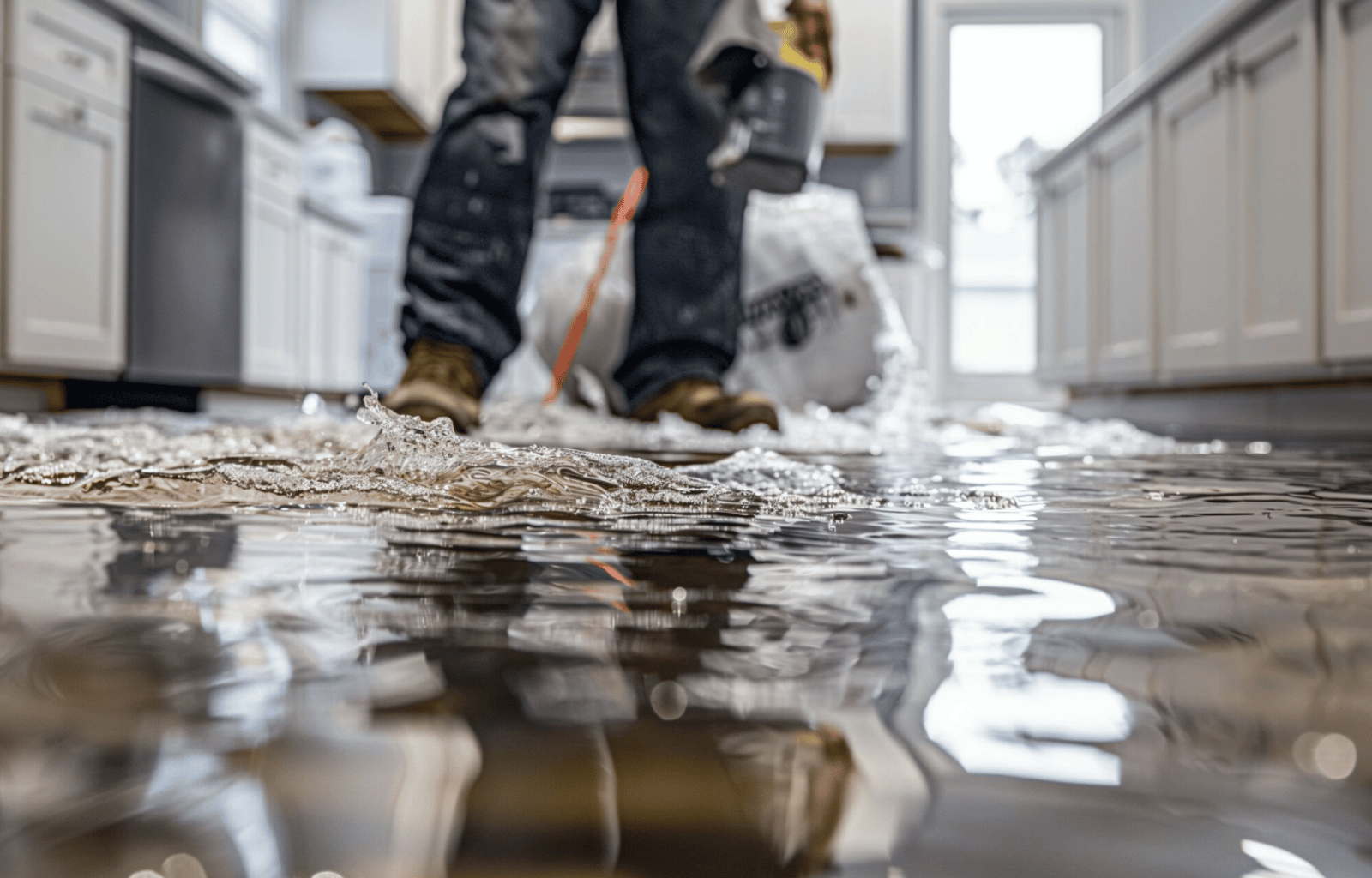

When water floods your Phoenix home — whether from a monsoon storm, a burst pipe, or a failed appliance — the clock starts immediately. The longer water remains in contact with structural materials, the deeper it penetrates, the more damage it causes, and the greater the risk of mold developing in Phoenix's warm climate. Knowing how to dry out a flooded house in Phoenix fast can mean the difference between a manageable restoration and a complete gut job.
This guide walks through the professional process for drying a flooded home, explains what equipment is needed, highlights what Phoenix homeowners should and shouldn't do on their own, and answers the most common questions about the drying process.
Why Drying Speed Matters So Much in Phoenix, AZ
Phoenix's climate creates a paradox for water damage. The region's naturally low humidity is actually an asset for drying — when conditions are managed properly, moisture moves from wet materials into the air more readily than it would in a high-humidity environment. This is good news for drying times when handled correctly.
The challenge is that Phoenix's consistently high temperatures — often above 100°F in summer — simultaneously accelerate mold growth. Mold spores are always present in the environment and require only warmth, moisture, and an organic food source to colonize. In a hot Phoenix home with wet drywall, insulation, or wood framing, mold can begin growing within 24–48 hours of water intrusion. The drying process must therefore be fast and thorough.
A second complication specific to Phoenix is slab-on-grade construction. Most Phoenix metro homes sit on concrete slabs rather than raised foundations. Water that reaches a concrete slab can wick up through the concrete into flooring systems above and migrate along the slab under baseboards and into wall cavities with surprising speed. Drying a slab-foundation home requires specific equipment placement and extended drying times compared to homes with crawl spaces or basements.
Step 1: Stop the Water Source and Ensure Safety
Before any drying work can begin, the water source must be stopped completely. For internal failures like burst pipes or appliance leaks, this means locating and closing the appropriate shutoff valve. For monsoon flooding, it means ensuring the water intrusion has ceased before beginning work.
Safety checks before entering a flooded area include:
Once safety is confirmed, document all damage with photographs and video before any cleanup begins. This documentation is essential for your insurance claim. Review what to do immediately after water damage in Phoenix for a complete pre-cleanup checklist.
Step 2: Remove Standing Water with Proper Extraction Equipment
The first physical step in drying a flooded house is removing all standing water as quickly as possible. The method and equipment used determines how thoroughly this is accomplished.
What Professionals Use for Water Extraction
Professional water extraction uses commercial-grade equipment that far exceeds the capacity of any consumer wet/dry vacuum:
What to Do While Waiting for Professionals
If water extraction professionals cannot arrive immediately, Phoenix homeowners can take these interim steps to limit damage:
Do not use household fans in areas with standing water or known sewage contamination. Fans before extraction is complete can spread contaminated water droplets and do not dry structural materials effectively at this stage.
Step 3: Remove or Protect Wet Contents and Materials
After standing water is extracted, the focus shifts to removing materials and contents that will impede structural drying or are themselves unsalvageable:
Contents Removal
Wet furniture, electronics, documents, clothing, and personal items should be removed from the affected area. Some items may be restorable through professional content cleaning; others may need to be discarded. Restoration professionals document all removed items for insurance purposes.
Carpet and Pad
In most water damage situations, carpet pad must be removed — it is a dense foam that holds enormous amounts of water and dries very slowly, creating a prime mold environment beneath the carpet. Carpet itself may be salvageable in clean water situations if extracted promptly, but pad replacement is nearly always required. In Category 2 or 3 contaminated water situations, both carpet and pad must be removed.
Baseboard Removal
Baseboards are removed to allow air circulation along the bottom of walls and to access the wall cavity drying zone. This also allows moisture meters to accurately assess wall material saturation. In Phoenix slab homes, moisture often wicks up between the slab and the bottom plate — removing baseboards exposes this area for drying.
Drywall Assessment
Depending on saturation levels measured by moisture meters, sections of drywall may need to be removed to a flood cut — typically 12–24 inches above the water line. Drywall absorbs water like a sponge and does not dry effectively from the outside in. Removing saturated drywall exposes the wall cavity and framing, dramatically accelerating drying and preventing mold within the wall.
Step 4: Deploy Industrial Drying Equipment
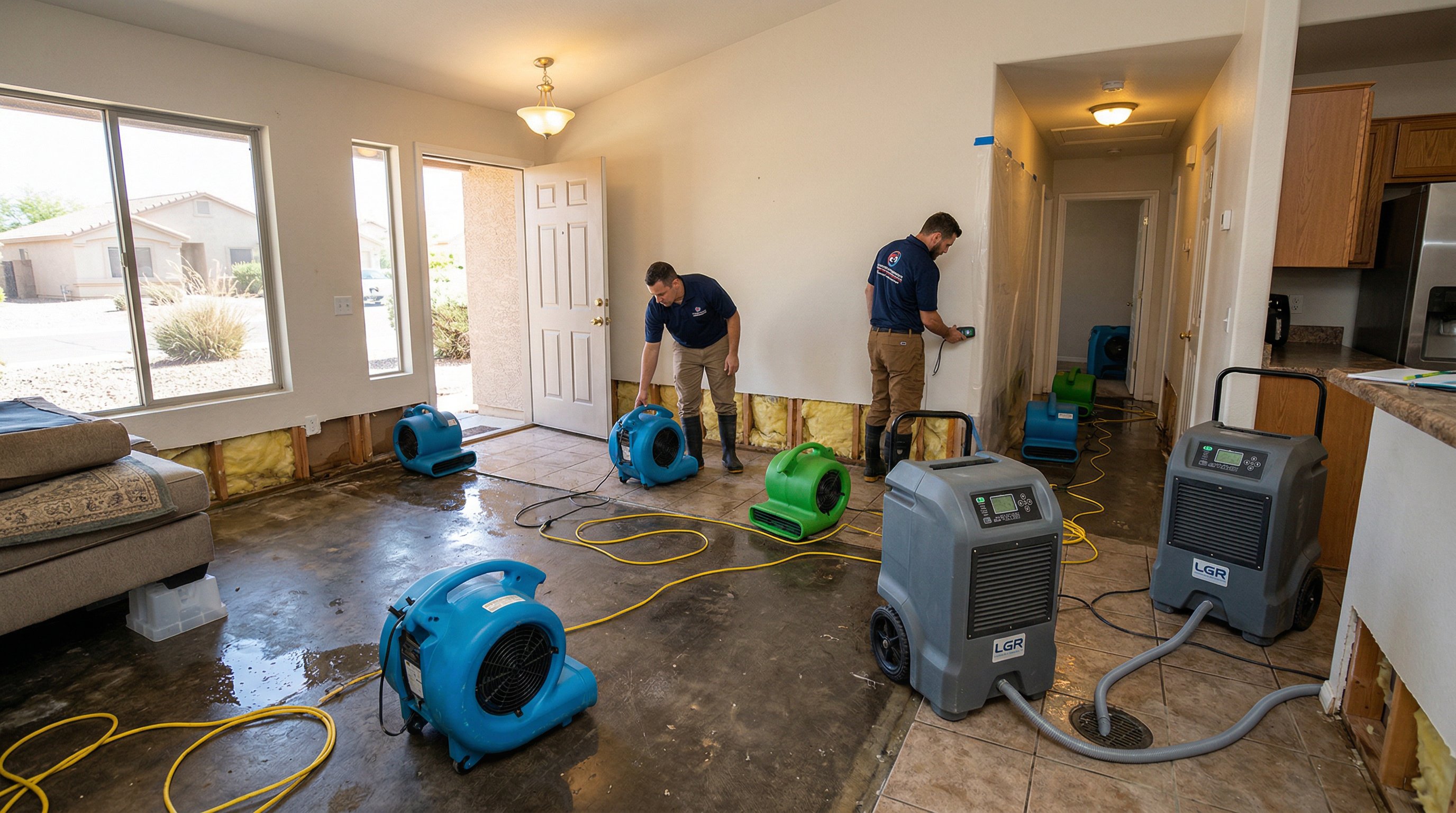
This is the phase that distinguishes professional restoration from DIY attempts. Proper structural drying requires calibrated industrial equipment deployed in sufficient quantity and configured according to a science-based drying plan.
Air Movers
Industrial air movers (also called air blowers or snail fans) are not household fans. They are engineered to move large volumes of air in a focused pattern at low heights, creating turbulent airflow across wet surface areas. This accelerates evaporation by continuously replacing the humid air layer directly above wet surfaces with drier ambient air.
Professional dehumidification-drying">dehumidification and drying protocols specify the number of air movers based on the square footage of affected area, typically one unit per 50–70 square feet of wet floor surface as a baseline, with additional units for walls and ceilings.
Dehumidifiers
As air movers evaporate moisture from surfaces, they increase the humidity of the room air. Without dehumidifiers running simultaneously, the air quickly becomes saturated and evaporation slows to a halt. Commercial refrigerant dehumidifiers remove moisture from the air continuously, maintaining the low relative humidity conditions necessary for efficient structural drying.
In Phoenix, the naturally low ambient humidity is helpful — but with a house full of wet materials actively evaporating, ambient conditions become irrelevant. The closed-up drying environment requires active dehumidification regardless of outdoor conditions.
Desiccant Dehumidifiers
For deep structural drying — particularly in slab-on-grade Phoenix homes where moisture is wicking up through concrete — desiccant dehumidifiers are sometimes used. These units use a chemical desiccant material to adsorb moisture and are effective at lower temperature and humidity ranges where refrigerant units lose efficiency.
Injectidry Systems
For wall cavities that are not opened, specialized injectidry systems inject dry air directly into the wall cavity through small holes drilled at the baseboard level. This allows technicians to dry wall cavities without full demolition in some situations, saving time and reconstruction costs. Whether this approach is appropriate depends on moisture readings and the contamination category of the water.
Step 5: Monitor and Document the Drying Process Daily
Professional drying is not a set-it-and-forget-it process. IICRC standards require daily monitoring and documentation of drying progress using calibrated instruments:
These daily logs create a documented record that drying was performed to standard — essential documentation for insurance claims and for verifying that the home is genuinely dry rather than just apparently dry at the surface.
Step 6: Post-Drying Cleaning and Antimicrobial Treatment
Once materials reach target moisture levels, affected surfaces receive thorough cleaning and antimicrobial treatment. This step is particularly important in Phoenix's heat because any remaining organic matter — even in a technically dry environment — can still support microbial activity and odor.
Anti-microbial treatments use EPA-registered products applied at appropriate concentrations to remaining structural surfaces. This is a precautionary step even in clean water situations and a required step in any contaminated water scenario.
How Long Does It Take to Dry a Flooded House in Phoenix?
Industry standard structural drying typically takes 3–5 days with properly deployed equipment. However, this is a guideline, not a guarantee. Actual drying time depends on:
Equipment should not be removed until all materials reach documented target moisture levels — not on a calendar-based schedule. Premature equipment removal is one of the leading causes of secondary water damage and post-drying mold growth.
Frequently Asked Questions About Drying a Flooded House in Phoenix
Can I just open windows and run fans to dry my flooded Phoenix home?
Opening windows and running household fans may be appropriate for very minor water incidents on non-porous surfaces. For any significant flooding, this approach is inadequate. Household fans do not move enough air at the right angles to drive evaporation from structural materials. More critically, without dehumidification running simultaneously, the air inside the home quickly saturates and evaporation stalls completely. Professional equipment is engineered to work as a system — air movers and dehumidifiers together.
Does Phoenix's low humidity mean my house will dry faster without equipment?
Phoenix's low ambient humidity helps when windows and doors are open during dry weather, but this approach is limited. Once interior humidity rises from evaporation — which happens very quickly with any significant flooding — the low outdoor humidity becomes irrelevant unless a complete air exchange is constantly maintained. In practice, professional drying equipment creates a controlled drying chamber that outperforms relying on ambient conditions, even in dry Phoenix weather.
What's the risk of mold if I delay drying my Phoenix home?
Mold risk is significant in Phoenix's heat. Mold spores can begin germinating within 24–48 hours in warm, moist conditions. Phoenix summer temperatures of 95–110°F dramatically accelerate this timeline. Once mold colonizes building materials, the remediation process becomes substantially more complex and expensive than water damage restoration alone. Every day of delayed professional drying increases the probability and extent of mold growth.
Should I run my home's HVAC system to help dry a flooded area?
Do not run your HVAC system in flooded areas unless specifically instructed by a restoration professional. Running HVAC through ductwork in or near a contaminated water area can distribute contaminants throughout your home. Ductwork exposed to flooding may itself need cleaning or replacement. Professionals will manage airflow using standalone drying equipment rather than the home's HVAC system.
How do I know if my house is truly dry after restoration?
Dryness should be verified by documented moisture meter readings and thermal imaging, not by touch or appearance. Walls can feel dry to the touch while retaining moisture deep in the framing or insulation. Ask your restoration company for the complete drying log showing daily readings and the final clearance readings demonstrating target moisture levels were achieved. Accepting a verbal assurance of dryness without documented readings is a risk.
Can flooded hardwood floors be saved in a Phoenix home?
Hardwood floors are among the most challenging materials to dry after flooding. Phoenix's heat can cause rapid cupping and warping in wet hardwood. Whether hardwood can be saved depends on the type of wood, the extent of saturation, how quickly drying begins, and the contamination category of the water. In clean water situations with rapid response, some hardwood floors can be dried in place using specialized mat drying systems. In contaminated water or delayed-response situations, replacement is typically required. A professional assessment gives you an honest answer for your specific situation.
Get Your Phoenix Home Dry Fast
The most important thing you can do after flooding is to act immediately. Every hour matters — both for limiting structural damage and for preventing mold in Phoenix's warm climate. Professional flood damage restoration with properly deployed drying equipment gives your home the best chance of a complete, documented recovery without secondary damage.
Phoenix Water Damage Restoration is a trusted choice for commercial & residential water damage restoration in Phoenix, AZ, delivering fast response times, expert drying, and full-service restoration.
Call Us 24/7: (623) 300-3108
Easy steps to create a color palette
Lorem ipsum dolor sit amet, consectetur adipiscing elit lobortis arcu enim urna adipiscing praesent velit viverra sit semper lorem eu cursus vel hendrerit elementum morbi curabitur etiam nibh justo, lorem aliquet donec sed sit mi dignissim at ante massa mattis.
- Neque sodales ut etiam sit amet nisl purus non tellus orci ac auctor
- Adipiscing elit ut aliquam purus sit amet viverra suspendisse potent
- Mauris commodo quis imperdiet massa tincidunt nunc pulvinar
- Excepteur sint occaecat cupidatat non proident sunt in culpa qui officia
What is a color palette?
Vitae congue eu consequat ac felis placerat vestibulum lectus mauris ultrices cursus sit amet dictum sit amet justo donec enim diam porttitor lacus luctus accumsan tortor posuere praesent tristique magna sit amet purus gravida quis blandit turpis.

Don’t overspend on growth marketing without good retention rates
At risus viverra adipiscing at in tellus integer feugiat nisl pretium fusce id velit ut tortor sagittis orci a scelerisque purus semper eget at lectus urna duis convallis porta nibh venenatis cras sed felis eget neque laoreet suspendisse interdum consectetur libero id faucibus nisl donec pretium vulputate sapien nec sagittis aliquam nunc lobortis mattis aliquam faucibus purus in.
- Neque sodales ut etiam sit amet nisl purus non tellus orci ac auctor
- Adipiscing elit ut aliquam purus sit amet viverra suspendisse potenti
- Mauris commodo quis imperdiet massa tincidunt nunc pulvinar
- Adipiscing elit ut aliquam purus sit amet viverra suspendisse potenti
What’s the ideal customer retention rate?
Nisi quis eleifend quam adipiscing vitae aliquet bibendum enim facilisis gravida neque euismod in pellentesque massa placerat volutpat lacus laoreet non curabitur gravida odio aenean sed adipiscing diam donec adipiscing tristique risus amet est placerat in egestas erat.
“Lorem ipsum dolor sit amet consectetur adipiscing elit, sed do eiusmod tempor incididunt ut labore et dolore magna aliqua enim ad minim veniam.”
Next steps to increase your customer retention
Eget lorem dolor sed viverra ipsum nunc aliquet bibendum felis donec et odio pellentesque diam volutpat commodo sed egestas aliquam sem fringilla ut morbi tincidunt augue interdum velit euismod eu tincidunt tortor aliquam nulla facilisi aenean sed adipiscing diam donec adipiscing ut lectus arcu bibendum at varius vel pharetra nibh venenatis cras sed felis eget.