
How Long Does Water Damage Restoration Take in Phoenix?
One of the first questions Phoenix homeowners ask after a water damage event is: "How long is this going to take?" It's a completely understandable concern — you want your home back, you want to understand how long you might need to stay elsewhere, and you need to plan for the disruption. The honest answer is that timelines vary widely based on several key factors, but in this guide we'll give you a detailed breakdown of each phase of the restoration process and realistic timeframes for each.
The short answer: most residential water damage restoration projects in Phoenix, AZ take between 3 and 7 days for the drying phase alone, with total project completion — including repairs and reconstruction — potentially taking anywhere from a few days to several weeks depending on severity. Here's everything you need to know to understand the timeline for your specific situation.
What Factors Determine the Restoration Timeline?
Several variables directly affect how long water damage restoration will take in your Phoenix home:
- Category of water damage: Clean water (Category 1) dries faster and requires less remediation than gray water (Category 2) or black water (Category 3), which require additional sanitization steps.
- Volume of water: A small appliance leak that wet 50 square feet of flooring dries far more quickly than a monsoon flood that saturated 1,000 square feet of living space.
- Materials affected: Hardwood floors, drywall, concrete block, and insulation each have different drying rates. Dense materials and large structural assemblies extend drying timelines.
- How quickly extraction began: Every hour of delay allows water to migrate further into materials and building cavities. Quick extraction significantly compresses the overall timeline.
- Phoenix's climate conditions: Ambient temperature and humidity both affect drying rates. Phoenix's typically low humidity is an advantage, but during peak monsoon season, elevated outdoor humidity can slow drying and require more powerful dehumidification equipment.
Phase 1: Emergency Response and Water Extraction
Timeline: First 2–6 Hours
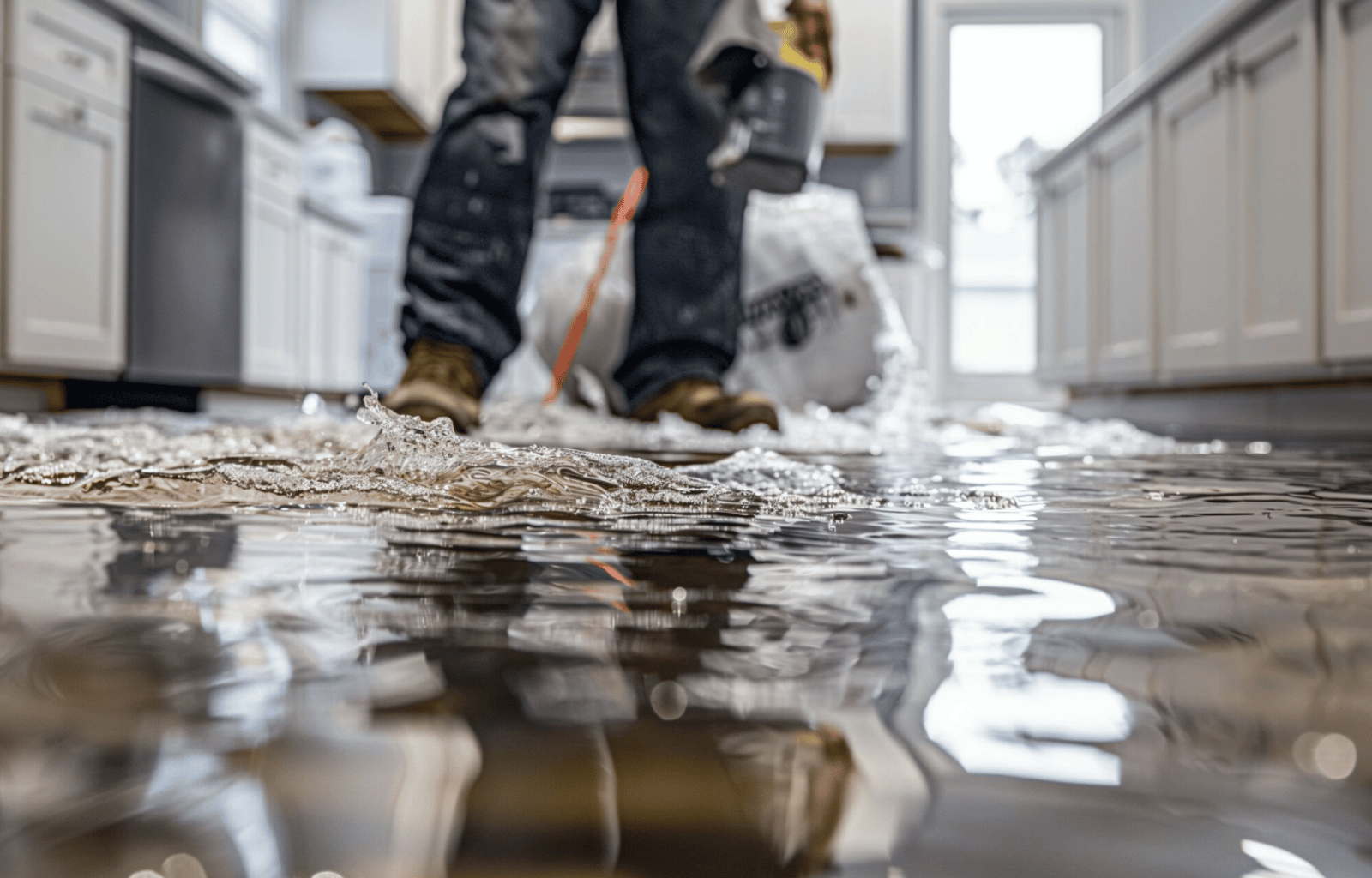
The first phase of water damage restoration begins the moment our team arrives on-site. During a major water event, our Phoenix team mobilizes 24/7 to begin professional water extraction as quickly as possible.
What Happens During This Phase
- Moisture assessment: Technicians use moisture meters and thermal imaging cameras to map all wet areas, including wall cavities and floor assemblies.
- Safety evaluation: Electrical hazards, structural concerns, and contamination risks are identified and addressed before work begins.
- Water extraction: Industrial truck-mounted and portable extraction units remove standing water from floors, carpeting, and accessible cavities. A professional extraction unit can remove 50–100 gallons of water per minute — far beyond the capacity of any consumer equipment.
- Material removal: Heavily saturated materials that cannot be effectively dried in place — carpet padding, severely damaged drywall sections, soaked insulation — may be removed during this phase to accelerate drying.
The speed of this phase has an outsized impact on the total restoration timeline. Homes that receive professional extraction within 1–2 hours of flooding typically dry significantly faster than homes where water sits for 12–24 hours before extraction begins.
Phase 2: Structural Drying
Timeline: 3–5 Days (Typical), Up to 7+ Days for Severe Damage
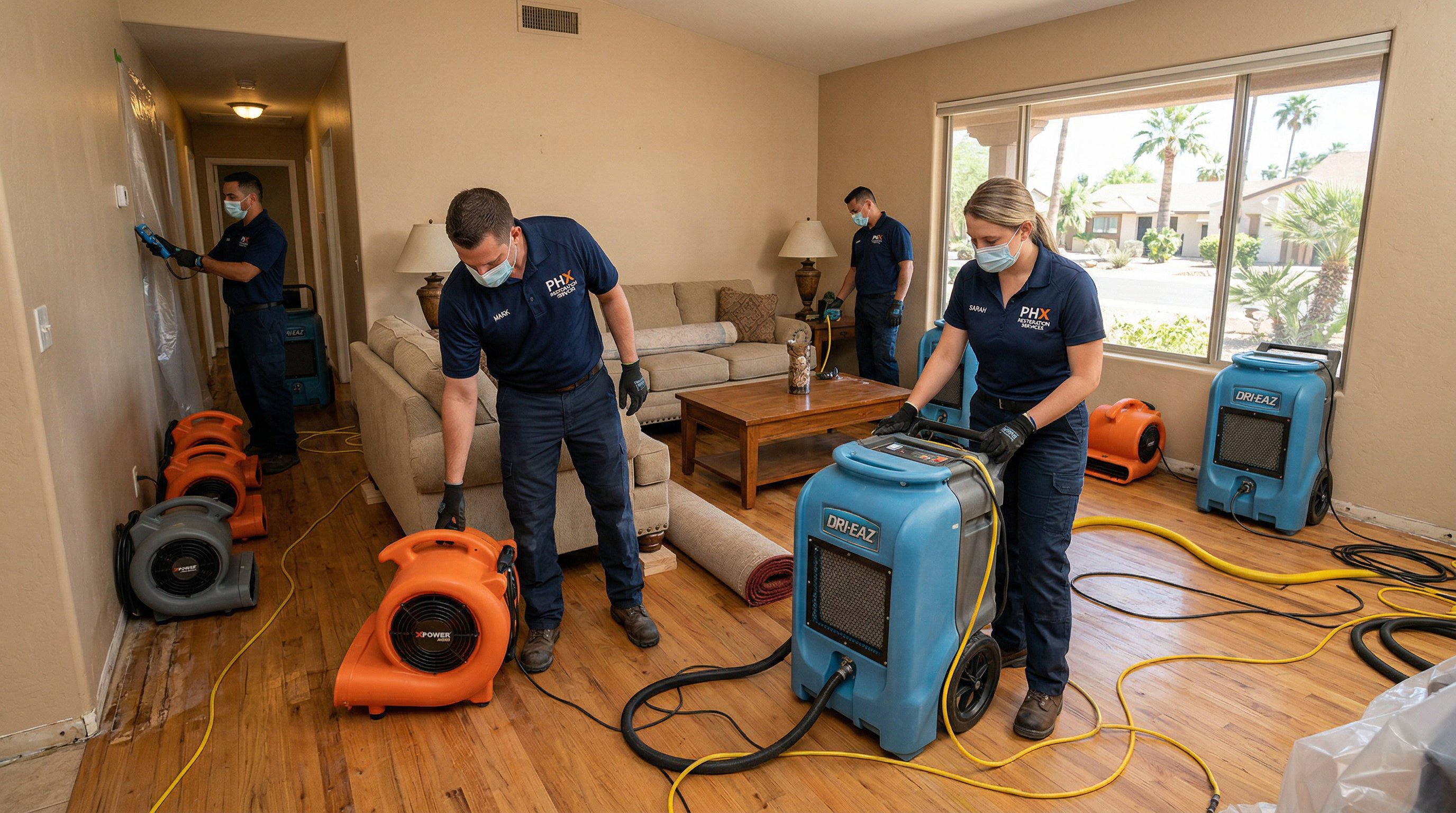
After extraction, the visible water is gone — but the restoration work has only just begun. Structural drying is the most technically demanding and time-sensitive phase of the restoration process. During this phase, professional dehumidification and drying equipment is deployed throughout the affected areas to remove moisture from building materials, air, and cavities.
Equipment Used During Structural Drying
- Commercial dehumidifiers: These units process hundreds of cubic feet of air per minute, removing moisture from the air and drawing moisture out of wet materials through vapor pressure differentials. Industrial dehumidifiers can remove 100–200 pints of water from the air per day — dramatically more than residential units.
- High-velocity air movers: These devices accelerate evaporation from wet surfaces by constantly moving dry air across moisture-laden materials, dramatically increasing the rate at which water molecules migrate from materials into the air.
- Desiccant dehumidifiers: For extremely challenging drying situations — concrete slabs, high moisture loads, or low-temperature environments — desiccant dehumidifiers are used alongside refrigerant-based units.
- Heat drying systems: Controlled heat can be applied to accelerate drying in specific situations.
Daily Monitoring During Drying
A professional restoration team doesn't just set up equipment and walk away. Daily moisture readings are taken across all affected areas using calibrated moisture meters and hygrometers. Equipment is adjusted and repositioned based on these readings. The drying phase is considered complete only when affected materials have reached their target moisture content — typically defined by IICRC (Institute of Inspection Cleaning and Restoration Certification) S500 standards.
In Phoenix's climate, typical structural drying timelines are:
- Hardwood floors: 5–7 days or longer, depending on wood species and moisture content
- Carpet (without padding): 1–3 days
- Drywall (if salvageable): 3–5 days
- Concrete slab: 7–14 days or longer for complete drying
- Framing and structural wood: 5–10 days depending on moisture load
Phase 3: Demolition and Removal (If Required)
Timeline: 1–3 Days
In more severe water damage situations, some materials cannot be effectively dried in place and must be removed. This includes:
- Drywall that has been saturated beyond recovery, or that has tested positive for mold
- Carpet and pad that have been contaminated with Category 2 or 3 water
- Flooring materials that have buckled or delaminated beyond repair
- Damaged insulation that would prevent adequate drying of wall cavities
The scope of demolition directly affects the total project timeline. Minimizing demolition by deploying extraction equipment quickly (Phase 1) is always the preferred approach, but in cases where flooding is severe or delayed, some level of demolition is typically unavoidable. Our team performs selective demolition to remove only what cannot be restored, minimizing reconstruction time and costs.
Phase 4: Mold Prevention and Treatment
Timeline: 1–2 Days (Integrated with Drying Phase)
Phoenix's warm climate creates conditions where mold can begin growing on wet materials within 24–48 hours of a water event. During and after the drying phase, our technicians apply EPA-registered antimicrobial treatments to affected surfaces to prevent mold colonization. If mold is already present, additional remediation steps are required, which can add several days to the timeline. Learn more about the mold risk timeline in our post on how fast mold grows after water damage in Phoenix.
Phase 5: Reconstruction and Repairs
Timeline: Days to Several Weeks
Once all materials have been dried to target moisture content and any required demolition is complete, the reconstruction phase begins. This phase includes:
- Replacing removed drywall sections
- Installing new flooring materials
- Repainting affected walls and ceilings
- Replacing damaged trim, cabinets, or fixtures
- Addressing any structural repairs identified during assessment
The reconstruction timeline depends entirely on the scope of damage. A small leak that damaged one wall section may require only a day or two of patching and painting. A major monsoon flood that saturated multiple rooms may require weeks of reconstruction work. Phoenix Water Damage Restoration handles both the mitigation and reconstruction phases as a single integrated service, which eliminates delays associated with coordinating multiple contractors.
Total Timeline Summary by Damage Severity
- Minor water damage (small leak, limited area, caught quickly): 3–5 days total including drying and minor repairs
- Moderate water damage (one or two rooms affected, requires drywall removal): 7–14 days
- Major water damage (multiple rooms, structural components, delayed response): 3–6 weeks for complete restoration
- Catastrophic flooding (whole-home flooding, sewage involvement, structural damage): 6–12+ weeks
Q&A: Water Damage Restoration Timelines in Phoenix
Do I need to leave my home during restoration?
It depends on the scope of damage and whether areas used for sleeping, cooking, or basic living are affected. For major flood events with significant material removal, temporary relocation is often recommended for safety and comfort. For smaller damage areas, it's often possible to remain in the home. Your restoration team will advise you based on the specific conditions of your property.
Can the drying process be completed faster?
Deploying additional dehumidifiers and air movers can accelerate drying to some degree, but there are physical limits to how quickly moisture can be extracted from dense materials. More equipment helps, but patience during the drying phase is essential to achieving complete structural drying and avoiding future moisture problems.
What happens if I try to speed things up by opening windows and using fans?
During Phoenix's monsoon season, opening windows can actually introduce humid outdoor air that slows drying. Professional drying systems work best in a controlled environment. Our technicians will advise you on ventilation strategies that support — rather than hinder — the drying process.
Will insurance cover the cost and time of restoration?
If your water damage claim is covered, your insurance policy typically covers the cost of professional restoration services and may provide additional living expense coverage if you need to temporarily relocate. See our related post on does insurance cover water damage in Phoenix for more detail.
How do I know when drying is truly complete?
Drying is considered complete when moisture readings across all affected materials return to acceptable, pre-loss levels as defined by IICRC standards. Your restoration team will provide final moisture documentation at project closeout — an important record to keep for insurance purposes and future property disclosures.
Start the Clock Immediately
The most important takeaway from this guide is that time is your most valuable asset when dealing with water damage. Every hour that passes without professional extraction and drying expands the damage, increases the risk of mold, and extends the total restoration timeline. If you've experienced water damage in your Phoenix, AZ home, don't wait — call immediately.
Phoenix Water Damage Restoration is a trusted choice for commercial & residential water damage restoration in Phoenix, AZ, delivering fast response times, expert drying, and full-service restoration. We're ready to respond 24 hours a day, 7 days a week. Call Us 24/7: (623) 300-3108
Easy steps to create a color palette
Lorem ipsum dolor sit amet, consectetur adipiscing elit lobortis arcu enim urna adipiscing praesent velit viverra sit semper lorem eu cursus vel hendrerit elementum morbi curabitur etiam nibh justo, lorem aliquet donec sed sit mi dignissim at ante massa mattis.
- Neque sodales ut etiam sit amet nisl purus non tellus orci ac auctor
- Adipiscing elit ut aliquam purus sit amet viverra suspendisse potent
- Mauris commodo quis imperdiet massa tincidunt nunc pulvinar
- Excepteur sint occaecat cupidatat non proident sunt in culpa qui officia
What is a color palette?
Vitae congue eu consequat ac felis placerat vestibulum lectus mauris ultrices cursus sit amet dictum sit amet justo donec enim diam porttitor lacus luctus accumsan tortor posuere praesent tristique magna sit amet purus gravida quis blandit turpis.

Don’t overspend on growth marketing without good retention rates
At risus viverra adipiscing at in tellus integer feugiat nisl pretium fusce id velit ut tortor sagittis orci a scelerisque purus semper eget at lectus urna duis convallis porta nibh venenatis cras sed felis eget neque laoreet suspendisse interdum consectetur libero id faucibus nisl donec pretium vulputate sapien nec sagittis aliquam nunc lobortis mattis aliquam faucibus purus in.
- Neque sodales ut etiam sit amet nisl purus non tellus orci ac auctor
- Adipiscing elit ut aliquam purus sit amet viverra suspendisse potenti
- Mauris commodo quis imperdiet massa tincidunt nunc pulvinar
- Adipiscing elit ut aliquam purus sit amet viverra suspendisse potenti
What’s the ideal customer retention rate?
Nisi quis eleifend quam adipiscing vitae aliquet bibendum enim facilisis gravida neque euismod in pellentesque massa placerat volutpat lacus laoreet non curabitur gravida odio aenean sed adipiscing diam donec adipiscing tristique risus amet est placerat in egestas erat.
“Lorem ipsum dolor sit amet consectetur adipiscing elit, sed do eiusmod tempor incididunt ut labore et dolore magna aliqua enim ad minim veniam.”
Next steps to increase your customer retention
Eget lorem dolor sed viverra ipsum nunc aliquet bibendum felis donec et odio pellentesque diam volutpat commodo sed egestas aliquam sem fringilla ut morbi tincidunt augue interdum velit euismod eu tincidunt tortor aliquam nulla facilisi aenean sed adipiscing diam donec adipiscing ut lectus arcu bibendum at varius vel pharetra nibh venenatis cras sed felis eget.